
Best N95 Masks for Wildfire Smoke: A Canadian Buyer's Guide
Wildfire Smoke Is a Fine Particle Problem — and Not Every Mask Filters It
Wildfire smoke is a mix of gases, particles, and water vapour, and the fine particles are the main health risk, they're small enough to get deep into your lungs and bloodstream, and you can't see them with the naked eye. During smoke events, the Public Health Agency of Canada recommends wearing a respirator mask, like an N95, as one of the key ways to reduce your exposure, alongside limiting time outdoors and protecting your indoor air.
That's an important distinction for anyone shopping for smoke protection: a respirator is not the same thing as a medical or surgical mask. Health Canada is explicit that these two mask types are not interchangeable, surgical and cloth masks don't fit the face tightly enough, and the material isn't designed to filter out wildfire smoke particles. A scarf, bandana, or neck gaiter won't help either.
The U.S. EPA reinforces the fit requirement directly: choose a respirator with two head straps, not ear loops, since a mask that isn't sealed tightly against the face lets unfiltered air leak in around the edges, defeating the purpose of wearing one at all.
Why N95 Is the Recommended Standard
Both Health Canada and the CDC point to NIOSH-certified N95 respirators as the standard for wildfire smoke protection. The "N95" designation means the respirator filters at least 95% of airborne particles when it's sealed properly against the face, which is why fit matters as much as filter rating.
Harvard T.H. Chan School of Public Health's Healthy Buildings program frames it by exposure level: an N95 is the right call for typical wildfire smoke exposure, including AQI readings of "very unhealthy" or "hazardous." (Their guidance reserves P100 + multigas respirators for people working directly in a burn-scar area or cleaning soot and ash, a different use case than day-to-day smoke exposure.)
How to Get an Effective Seal
A NIOSH-certified N95 only works if it's worn correctly. Before heading outside during a smoke event:
Choose the right size and shape. It should fully cover your nose, mouth, and chin.
Check for gaps. The mask material should pull in slightly when you inhale, and no air should escape around the edges when you exhale.
Adjust the straps and nosepiece so the respirator sits snugly with no gaps.
Shave, if possible. Facial hair breaks the seal and significantly reduces protection; this is one of the most common reasons a properly rated respirator underperforms.
Replace it as soon as it's dirty, damp, damaged, or becomes harder to breathe through.
A note on children: NIOSH-certified respirators generally aren't designed or sized for children under 2, and even for older children, manufacturers build these for adult workplace use; fit is harder to guarantee, so supervise use closely and watch for a child pulling the mask down or off.
Heart or lung conditions: talk to your doctor before wearing a respirator, and if you feel dizzy or have trouble breathing while wearing one, move to cleaner air before removing it.
Shop NIOSH-Certified N95 Respirators


FAQ
Can I use a surgical or medical mask for wildfire smoke?
No. Surgical and medical earloop masks aren't designed to seal tightly to the face, and the filter material isn't built to capture fine wildfire smoke particles. Health Canada specifically distinguishes these from respirators for this reason.
Is a KN95 as good as an N95 for wildfire smoke?
Health Canada recognizes KN95 and KF94 as acceptable equivalents to N95 for wildfire smoke, provided the mask fits well and seals against the face.
Do N95 masks protect against wildfire smoke odour or gases?
No. N95 respirators filter fine particles, not gases. Wildfire smoke also contains gases that an N95 won't block — reducing time outdoors and improving indoor air filtration are still important even while wearing a respirator.
How do I know if my N95 is NIOSH-certified?
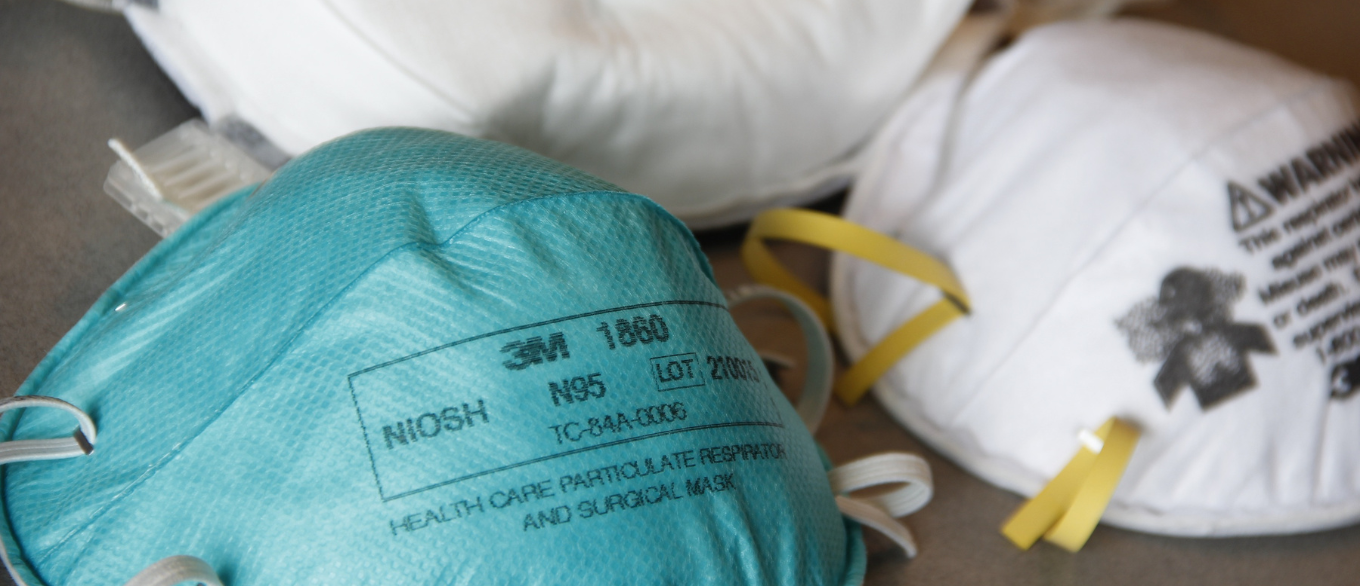
Look for "NIOSH" and "N95" printed directly on the respirator. This confirms it's been tested and approved, unlike uncertified masks sometimes sold as N95-style.
Can children wear N95 respirators for wildfire smoke?
Not children under 2. Older children can wear a properly-fitted respirator, but NIOSH-certified options aren't specifically sized or tested for kids, so fit and supervision matter more than usual.
Sources referenced: Health Canada (Using a respirator mask during wildfire smoke events), U.S. CDC (Wildfire Safety Guidelines), U.S. EPA (Protect Your Lungs from Wildfire Smoke or Ash), Harvard T.H. Chan School of Public Health Healthy Buildings Program.
