HOCl vs Traditional Disinfectants: Bleach, Quats & Beyond: A Complete Comparison Guide
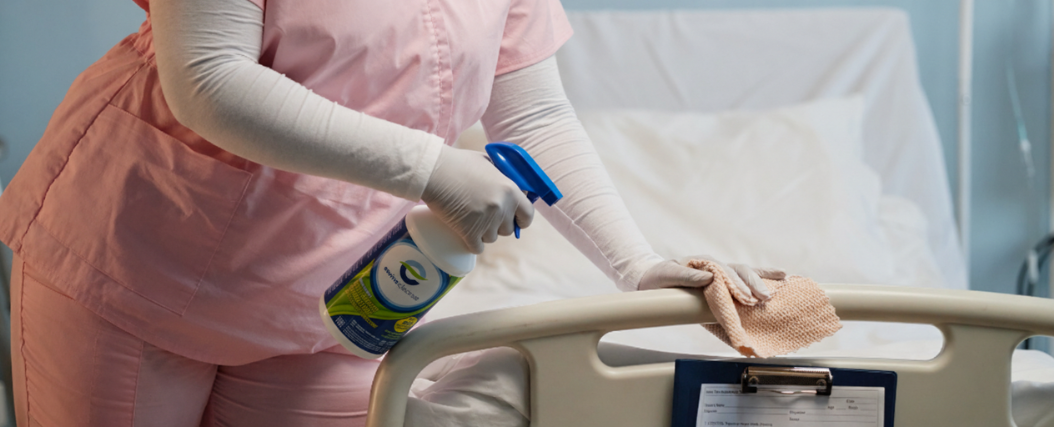
As infection-control standards rise across healthcare, education, food service, and public facilities, the question has shifted from "Does it kill pathogens?" to "Does it kill pathogens safely?" Traditional disinfectants like bleach and quaternary ammonium compounds (quats) remain widely used, but both carry significant drawbacks: harsh fumes, skin irritation, mandatory PPE, and corrosive damage to equipment.
Hypochlorous acid (HOCl), the active ingredient in Envirocleanse-A, delivers hospital-grade, broad-spectrum disinfection with a dramatically safer, simpler, and more cost-effective profile. This guide compares HOCl against bleach, quats, and other common disinfectant chemistries to help facilities, clinics, and households choose the right product.
What Is Hypochlorous Acid (HOCl)?
Hypochlorous acid (HOCl) is a naturally occurring, EPA-registered antimicrobial compound produced by the human immune system to fight infection. In disinfectant form, HOCl is electrochemically generated from saltwater and electricity — no harsh chemical additives required.
HOCl is:
- Broad-spectrum: effective against bacteria, viruses, fungi, and spores
- Non-toxic: safe for skin, eyes, children, seniors, and pets
- Non-corrosive: safe on medical equipment, electronics, food surfaces, and metals
- Odor-free: no fumes, no ventilation required
- Health Canada DIN approved and EPA registered for use in healthcare, food service, and public facilities
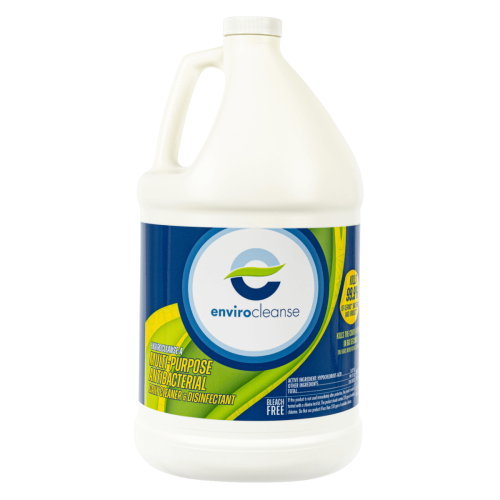
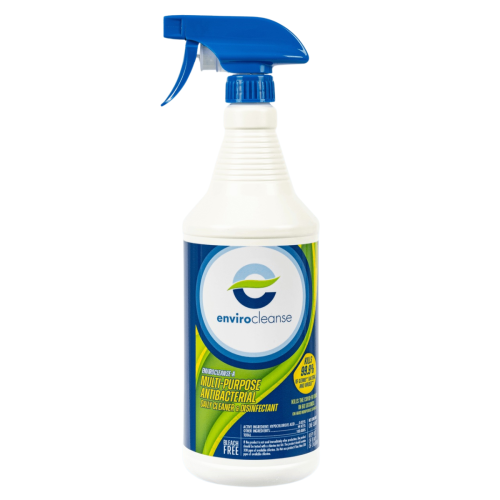
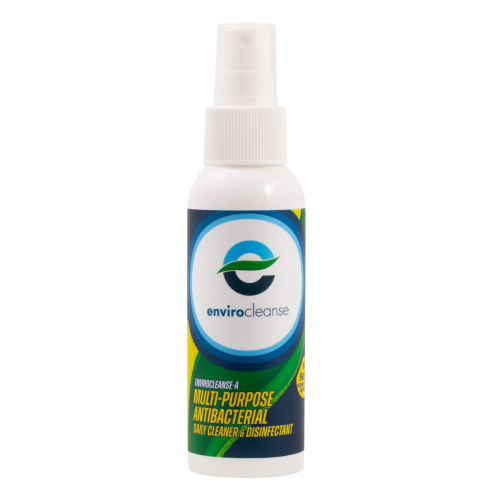
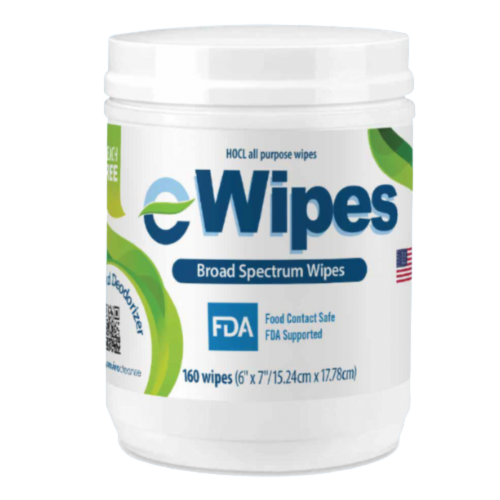
Envirocleanse-A is a stabilized HOCl solution optimized for maximum antimicrobial efficacy and shelf stability, available in spray, wipes, gallon refills, and travel sizes.
HOCl vs Bleach: What's the Difference?
What Makes Bleach Effective, and Problematic
Bleach has long been a go-to disinfectant because it is inexpensive and broad-spectrum, including efficacy against spores. However, real-world use consistently exposes its limitations.
Bleach strengths:
- Broad-spectrum kill, including bacterial spores
- Widely recognized and trusted
- Fast action in many applications
Bleach limitations:
- Strong chlorine fumes that irritate eyes, lungs, and skin
- Corrosive to metals, stainless steel, and electronics
- Requires PPE for routine use
- Degrades fabrics, coatings, and plastics
- Requires rinsing on food-contact surfaces
- Shorter shelf life once opened
For high-volume, everyday disinfection — especially in environments with children, seniors, patients, or pets — bleach is a poor fit.
The Chemistry Behind HOCl vs Bleach
Although bleach produces some hypochlorous acid when diluted in water, the two products are chemically very different in practice.
Bleach contains sodium hypochlorite (NaOCl). When dissolved in water, it forms HOCl through this reaction:
NaOCl + H₂O → HOCl + Na⁺ + OH⁻
However, bleach solutions remain highly alkaline and contain large quantities of hypochlorite ions (OCl⁻) — a significantly weaker antimicrobial than HOCl. At higher pH levels, more of the disinfectant exists in this weaker hypochlorite form, reducing kill efficacy.
Envirocleanse-A is produced and stabilized at an optimal pH that maximizes the active HOCl fraction, delivering more efficient pathogen destruction without the corrosive chemistry of bleach.
HOCl vs Quats: Which Is Safer and More Effective?
What Are Quaternary Ammonium Compounds (Quats)?
Quaternary ammonium compounds (quats) are among the most widely used disinfectant categories in healthcare and commercial settings, popular for their convenient wipe formats and broad bacterial efficacy.
Quats strengths:
- Effective against many bacteria, viruses, and fungi
- Convenient wipe-based formats
- Widely adopted in clinical settings
Quats limitations:
- Linked to occupational asthma with repeated exposure
- Leave residue that attracts dirt and requires follow-up wiping
- Require gloves and PPE for routine use
- Some pathogens require extended contact times
- Not recommended for pediatric, geriatric, or scent-sensitive environments
- Surface compatibility concerns with plastics, upholstery, and electronics
For facilities prioritizing low-toxicity chemistry and worker safety, quats present meaningful long-term health risks.
Envirocleanse-A vs Cavi Disinfectant (HOCl vs Quats Head-to-Head)
| Feature | Envirocleanse-A (HOCl) | Cavi Disinfectant (Quats) |
|
Active Ingredient |
Hypochlorous Acid | Quaternary Ammonium |
|
PPE Required |
No | Yes |
|
Odor |
None | Chemical Scent |
|
Surface Compatibility |
All hard surfaces, electronics, food contact | Some material limitations |
|
Residue |
None | May require follow-up wiping |
|
Kill Times |
30 sec - 10 min depending on pathogen | 1-3 minutes depending on product |
|
Safety Profile |
Non-toxic, pet/kid/senior-safe | Potential respiratory irritation |
|
Asthma Risk |
None | Associated with repeated exposure |
Safety Comparison: HOCl vs Bleach vs Quats
| Feature | HOCl (Envirocleanse-A) | Bleach | Quats |
|
Odor / Fumes |
None | Strong chlorine smell | Chemical scent, lingering residue |
|
PPE Required |
No | Yes | Yes |
|
Respiratory Safety |
Safe for asthma, kids, seniors | Irritating | Linked to respiratory sensitivity |
|
Skin Contact |
Safe | Irritating, can cause burns | Can cause dermatitis |
|
Surface Damage |
Non-corrosive | Highly corrosive | Residue, some surface damage |
|
Rinse Required |
No | Yes (food surfaces) | Often yes |
|
Ready to Use |
Yes | No (must dilute) | Usually yes |
HOCl is the only disinfectant in this comparison requiring no PPE, no rinsing, no mixing, and no ventilation — making it the simplest option for staff training and daily turnover.
Surface Compatibility: What Can HOCl Be Used On?
HOCl (Envirocleanse-A) is safe on:
- Stainless steel and metals
- Medical and dental equipment
- Electronics and touchscreens
- Granite, wood, and laminate surfaces
- Food-contact surfaces (no rinse required)
- Upholstery and fabrics
- Plastics and vinyl
Bleach damages: stainless steel, aluminum, electronics, fabrics, coatings, and plastics.
Quats leave residue on: touchscreens, upholstery, vinyl, and fine surfaces — requiring additional wiping steps.
How Is HOCl Made? The Electrochemical Activation Process
Traditional disinfectants like bleach rely on manufactured chemical compounds that require careful transport, storage, and handling due to their corrosive or hazardous nature.
Envirocleanse-A uses electrochemical activation (ECA) — a process that generates hypochlorous acid directly from saltwater:
2NaCl + 6H₂O + Electricity → 2HOCl + O₂ + 4H₂ + 2NaOH
This technology produces a highly effective, stable disinfectant without harsh chemical additives — resulting in a product that is safe enough to be used around patients, children, and food without protective equipment or post-application rinsing.
Who Should Switch to HOCl? Best Use Cases for Envirocleanse-A
HOCl (Envirocleanse-A) is the ideal choice for:
- Healthcare facilities — hospital-grade kill without toxic fumes in patient areas
- Dental offices — safe on equipment, surfaces, and chairside use
- Schools and daycares — non-toxic, odor-free, safe around children all day
- Long-term care homes — safe for seniors with respiratory sensitivities
- Veterinary clinics — effective and pet-safe
- Food preparation environments — no rinse required on food-contact surfaces
- Gyms and wellness centers — equipment-safe, no residue, fast turnover
- Homes and consumer use — replaces multiple products safely
When bleach may still be appropriate:
- Specific regulatory requirements mandating hypochlorite use
- Heavy contamination scenarios requiring sporicidal chemistry
- Large-scale dilution-based cleaning protocols
When quats may still be appropriate:
- Facilities with existing protocols built around specific quat products
- Staff already trained on specific contact times and quat-based workflows
For the vast majority of daily and routine disinfection, HOCl delivers superior safety, broader surface compatibility, and equivalent or better efficacy — with far less operational complexity.
Frequently Asked Questions About HOCl Disinfectants
Is HOCl as effective as bleach at killing germs?
Yes. Hypochlorous acid (HOCl) is equally or more effective than bleach at killing pathogens at equivalent concentrations. Because HOCl exists in its active form — rather than the weaker hypochlorite ion (OCl⁻) that dominates in alkaline bleach solutions — it destroys pathogens more efficiently. Envirocleanse-A delivers hospital-grade kill times against bacteria, viruses, fungi, and spores.
Is HOCl safe to use around children and pets?
Yes. HOCl is non-toxic, odor-free, and does not require rinsing after application, making it safe to use in environments occupied by children, seniors, and pets. It is the same compound naturally produced by the human immune system to fight infection.
Does HOCl require PPE or special handling?
No. Unlike bleach and quats, Envirocleanse-A requires no gloves, masks, or protective clothing for routine use. It produces no fumes and can be used in occupied rooms without ventilation.
Is HOCl approved for use in healthcare and food service?
Yes. Envirocleanse-A is Health Canada DIN approved and EPA registered for use in hospitals, clinics, long-term care facilities, dental offices, and food preparation environments.
Can HOCl be used on electronics and medical equipment?
Yes. HOCl is non-corrosive and safe for use on medical devices, dental equipment, touchscreens, and electronics — unlike bleach, which corrodes metals and damages surfaces.
How long does HOCl take to disinfect a surface?
Kill times for Envirocleanse-A range from 30 seconds to 10 minutes depending on the pathogen. For most common bacteria and enveloped viruses, effective kill is achieved in under 2 minutes without wiping or rinsing.
What is the difference between HOCl and bleach chemically?
Bleach contains sodium hypochlorite (NaOCl), which in solution produces both hypochlorous acid (HOCl) and hypochlorite ions (OCl⁻). At the high pH of bleach solutions, the majority exists as the weaker OCl⁻ form. Envirocleanse-A is electrochemically produced and stabilized at a pH that maximizes the active HOCl fraction, making it more efficient and far less corrosive.
Can HOCl replace quats in a healthcare setting?
In most cases, yes. HOCl delivers comparable or superior broad-spectrum efficacy without the occupational health risks associated with repeated quat exposure, including respiratory sensitization and asthma. Many healthcare facilities have successfully transitioned from quats to HOCl-based disinfectants.
Ready to Switch to a Safer, Hospital-Grade Disinfectant?
Envirocleanse-A combines the disinfecting power facilities require with the safety profile patients, staff, and families deserve. No PPE. No fumes. No residue. No compromise.
Available in: Spray bottles | Wipes | Gallon refills | Travel sizes
Contact us to request a sample, get facility pricing, or speak with a disinfection specialist. Envirocleanse-A is Health Canada DIN approved and EPA registered. For specific pathogen efficacy claims and kill-time data, refer to the product label and technical data sheet.