
Quick Answer
Hypochlorous acid (HOCl) is considered non-toxic and biocompatible when properly produced and stabilized. It is naturally generated by the human immune system to fight pathogens and is widely used as a disinfectant because it kills bacteria, viruses, fungi, and spores while remaining gentle on skin, surfaces, and respiratory systems.
-------
Hypochlorous acid (HOCl) is becoming a preferred disinfectant across healthcare, education, food service, and veterinary settings because it delivers hospital-grade efficacy without the risks associated with traditional chemicals. Products such as Envirocleanse-A use stabilized HOCl to provide powerful disinfection while remaining gentle, non-corrosive, and safe around people, pets, and sensitive equipment.
Unlike many traditional disinfectants that rely on harsh chemical compounds, HOCl is derived from simple salt, water, and electricity through a controlled electrochemical activation process. This produces a highly effective antimicrobial solution capable of eliminating bacteria, viruses, fungi, and spores while maintaining an excellent safety profile.
This guide explains what “non-toxic” truly means, how HOCl works, and why it is considered one of the safest disinfectant chemistries available today.
What Is Hypochlorous Acid?
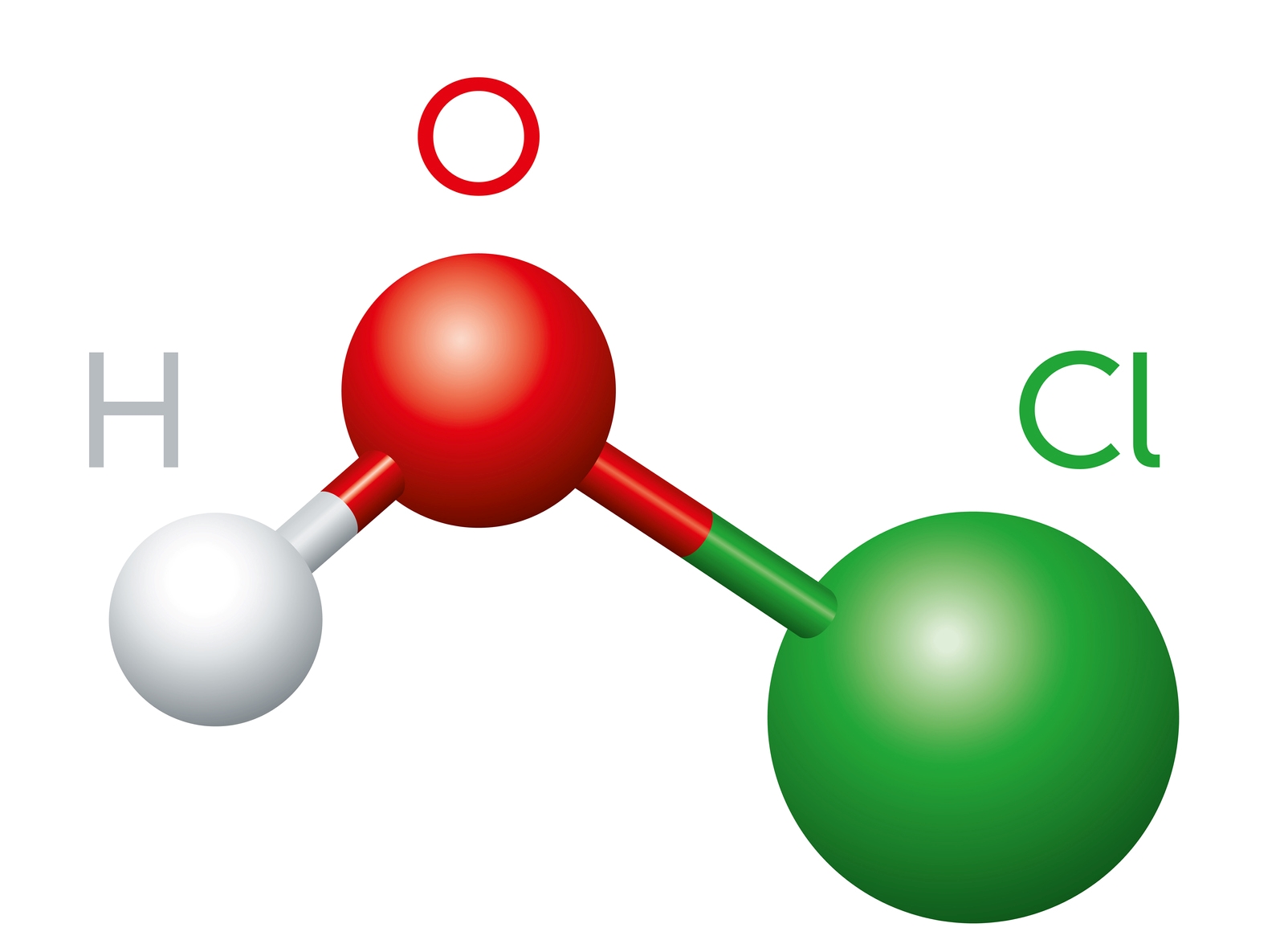
Hypochlorous acid (HOCl) is a molecule naturally produced by the human immune system. When white blood cells encounter harmful pathogens, they generate HOCl to neutralize bacteria, viruses, fungi, and other microorganisms. This natural defense mechanism allows the body to rapidly destroy microbes while minimizing damage to surrounding tissues.
Because HOCl exists naturally within the body, it is inherently biocompatible and far less irritating than bleach, quats, phenols, or alcohol-based disinfectants.
Envirocleanse-A uses a specialized electrochemical activation (ECA) process to create a stable HOCl solution that mirrors this naturally occurring defense molecule. The process converts simple saltwater into hypochlorous acid using electricity:
2NaCl + 6H₂O + Electricity → 2HOCl + O₂ + 4H₂ + 2NaOH
This technology allows Envirocleanse-A to deliver a powerful disinfectant without introducing harsh chemicals, making it suitable for daily use in high-traffic environments such as clinics, schools, and veterinary facilities.
Hypochlorous Acid Quick Facts
- Chemical formula: HOCl
- Naturally produced by: Human white blood cells
- Primary function: Kills bacteria, viruses, fungi, and spores
- Typical pH: 5–7 when stabilized for disinfectant use
- Safety profile: Non-toxic and biocompatible
- Odor: None or very mild chlorine scent
- Residue: Breaks down into salt and water
Common Safety Concerns With Disinfectants
Disinfectants often raise concerns about:
- Harsh chemical fumes
- Skin or eye irritation
- Respiratory sensitivity
- Corrosion or surface damage
- PPE requirements
- Residues on food-contact surfaces
Traditional disinfectants such as bleach and quaternary ammonium compounds can release volatile organic compounds (VOCs) or irritating fumes that affect indoor air quality and may cause discomfort for staff or occupants.
HOCL addresses many of these concerns by offering a non-irritating, non-corrosive disinfectant option that produces no harsh fumes and requires no PPE for routine use.
Stabilized HOCl disinfectants such as Envirocleanse-A are particularly valuable in environments where safety, comfort, and frequent disinfection must coexist.
Is Hypochlorous Acid Safe for Humans?
Hypochlorous acid is widely regarded as one of the safest disinfectant chemistries available. When stabilized for commercial use, HOCl can eliminate a broad spectrum of pathogens while remaining gentle on skin, eyes, and respiratory systems.
Because it is naturally produced by the immune system, HOCl is considered biocompatible, meaning it works effectively against microbes without causing the irritation commonly associated with bleach, quaternary ammonium compounds, or alcohol-based disinfectants.
**********
Why HOCl Is Considered Biocompatible
HOCl is one of the gentlest disinfectant chemistries available. It is considered biocompatible because:
- It is naturally produced by the immune system
- It is non-toxic to skin, eyes, and respiratory systems
- It has no harsh odor and produces no fumes
- It is non-corrosive and safe on sensitive equipment
- It breaks down into simple, environmentally safe components
- It does not trigger asthma or chemical sensitivities
- It requires no rinsing, even on food-contact surfaces
These characteristics make Envirocleanse-A ideal for environments such as:
- Healthcare facilities
- Schools and daycares
- Long-term care homes
- Veterinary clinics
- Fitness facilities
- Food service environments
In settings where vulnerable populations are present, a disinfectant that balances effectiveness with safety is essential.
Comparison: Bleach vs Quats vs Alcohol vs HOCl
Bleach (Sodium Hypochlorite)
- Strong fumes and chlorine odor
- Can irritate skin, eyes, and lungs
- Corrosive to metals and equipment
- Requires PPE during use
- Often requires rinsing on food surfaces
Quats (Quaternary Ammonium Compounds)
- Commonly used in disinfecting wipes
- Can cause dermatitis or respiratory irritation
- Leaves residue on surfaces
- Not suitable for food-contact surfaces without rinsing
Alcohol-Based Disinfectants
- Flammable
- Evaporates too quickly for proper contact time
- Can dry and damage plastics and equipment
- Strong odor
HOCl (Envirocleanse-A)
- Non-toxic and non-irritating
- No fumes or harsh odors
- Non-corrosive and material-safe
- No PPE required for routine disinfection
- No rinse required
- Safe around people, animals, and sensitive environments
Because HOCl combines strong antimicrobial activity with exceptional safety, it is increasingly used as a safer alternative to traditional disinfectants.
Safe Use Basics for Envirocleanse-A
Although Envirocleanse-A is non-toxic and gentle, proper disinfection technique ensures maximum effectiveness:
- Apply liberally so the surface remains wet for the full contact time
- Allow to air dry (no rinse required)
- Store tightly sealed, away from direct sunlight
- Do not mix with other disinfectants
- Use on clean, hard, non-porous surfaces
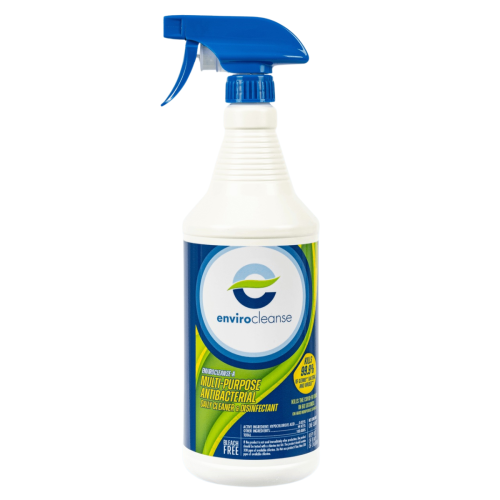
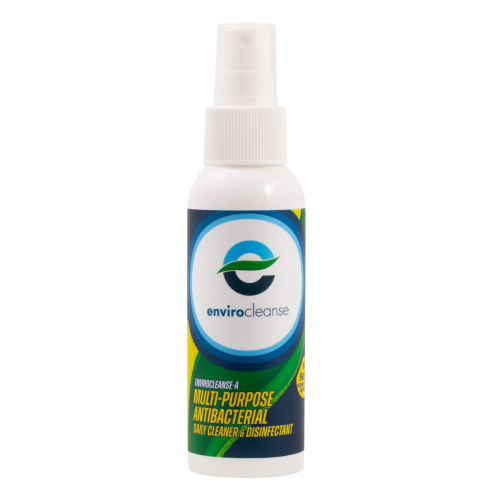
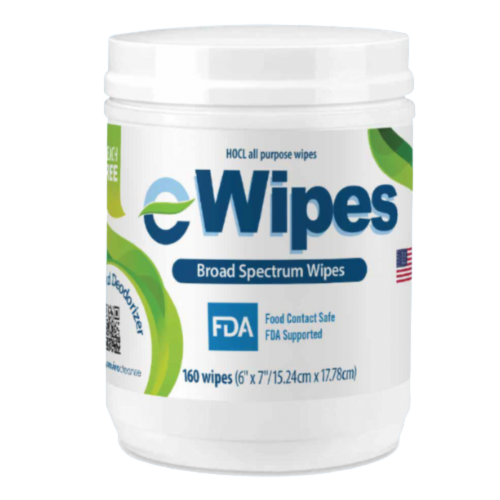
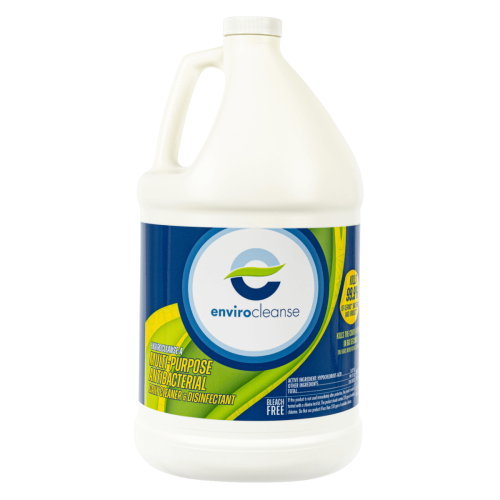
Envirocleanse-A is available in multiple formats, including ready-to-use spray bottles, gallon refills, travel-sized bottles, and disinfecting wipes, making it easy to integrate into both professional and residential cleaning routines.
FAQs
Is hypochlorous acid truly non-toxic?
Yes. Hypochlorous acid is considered non-toxic and biocompatible. It is naturally produced by human white blood cells and can eliminate bacteria, viruses, fungi, and spores while remaining gentle on skin, surfaces, and respiratory systems.
Is HOCl safe around children and pets?
Yes. Its gentle chemistry and lack of fumes make it suitable for use around children, pets, and individuals with respiratory sensitivities.
Does HOCl damage equipment or surfaces?
No. HOCl is non-corrosive and safe on metals, plastics, medical devices, and most common hard surfaces.
Is HOCl the same as diluted bleach?
No. While bleach eventually produces small amounts of hypochlorous acid in water, bleach solutions also contain other reactive chemicals that cause irritation, corrosion, and strong odors. Envirocleanse-A produces stabilized HOCl directly without those harsh byproducts.
Can Hypochlorous Acid Be Ingested?
Commercial HOCl disinfectants are not intended for ingestion, even though hypochlorous acid itself occurs naturally in the body. These products are designed for surface disinfection and should always be used according to manufacturer instructions.
Do I need gloves or PPE when using Envirocleanse-A?
No. PPE is not required for routine use, although some facilities may choose to use gloves as part of internal cleaning protocols.
Why Is Hypochlorous Acid Safer Than Bleach?
Bleach contains sodium hypochlorite, which produces hypochlorous acid when diluted in water but also creates other reactive chlorine compounds that can cause irritation, corrosion, and strong odors.
Stabilized hypochlorous acid disinfectants produce HOCl directly without those additional byproducts, allowing them to maintain powerful antimicrobial activity while remaining gentler on surfaces, equipment, and people.
Quick Answer
Hypochlorous acid (HOCl) is considered non-toxic and biocompatible when properly produced and stabilized. It is naturally generated by the human immune system to fight pathogens and is widely used as a disinfectant because it kills bacteria, viruses, fungi, and spores while remaining gentle on skin, surfaces, and respiratory systems.
-------
Hypochlorous acid (HOCl) is becoming a preferred disinfectant across healthcare, education, food service, and veterinary settings because it delivers hospital-grade efficacy without the risks associated with traditional chemicals. Products such as Envirocleanse-A use stabilized HOCl to provide powerful disinfection while remaining gentle, non-corrosive, and safe around people, pets, and sensitive equipment.
Unlike many traditional disinfectants that rely on harsh chemical compounds, HOCl is derived from simple salt, water, and electricity through a controlled electrochemical activation process. This produces a highly effective antimicrobial solution capable of eliminating bacteria, viruses, fungi, and spores while maintaining an excellent safety profile.
This guide explains what “non-toxic” truly means, how HOCl works, and why it is considered one of the safest disinfectant chemistries available today.
What Is Hypochlorous Acid?
Hypochlorous acid (HOCl) is a molecule naturally produced by the human immune system. When white blood cells encounter harmful pathogens, they generate HOCl to neutralize bacteria, viruses, fungi, and other microorganisms. This natural defense mechanism allows the body to rapidly destroy microbes while minimizing damage to surrounding tissues.
Because HOCl exists naturally within the body, it is inherently biocompatible and far less irritating than bleach, quats, phenols, or alcohol-based disinfectants.
Envirocleanse-A uses a specialized electrochemical activation (ECA) process to create a stable HOCl solution that mirrors this naturally occurring defense molecule. The process converts simple saltwater into hypochlorous acid using electricity:
2NaCl + 6H₂O + Electricity → 2HOCl + O₂ + 4H₂ + 2NaOH
This technology allows Envirocleanse-A to deliver a powerful disinfectant without introducing harsh chemicals, making it suitable for daily use in high-traffic environments such as clinics, schools, and veterinary facilities.
Hypochlorous Acid Quick Facts
- Chemical formula: HOCl
- Naturally produced by: Human white blood cells
- Primary function: Kills bacteria, viruses, fungi, and spores
- Typical pH: 5–7 when stabilized for disinfectant use
- Safety profile: Non-toxic and biocompatible
- Odor: None or very mild chlorine scent
- Residue: Breaks down into salt and water
Common Safety Concerns With Disinfectants
Disinfectants often raise concerns about:
- Harsh chemical fumes
- Skin or eye irritation
- Respiratory sensitivity
- Corrosion or surface damage
- PPE requirements
- Residues on food-contact surfaces
Traditional disinfectants such as bleach and quaternary ammonium compounds can release volatile organic compounds (VOCs) or irritating fumes that affect indoor air quality and may cause discomfort for staff or occupants.
HOCL addresses many of these concerns by offering a non-irritating, non-corrosive disinfectant option that produces no harsh fumes and requires no PPE for routine use.
Stabilized HOCl disinfectants such as Envirocleanse-A are particularly valuable in environments where safety, comfort, and frequent disinfection must coexist.
Is Hypochlorous Acid Safe for Humans?
Hypochlorous acid is widely regarded as one of the safest disinfectant chemistries available. When stabilized for commercial use, HOCl can eliminate a broad spectrum of pathogens while remaining gentle on skin, eyes, and respiratory systems.
Because it is naturally produced by the immune system, HOCl is considered biocompatible, meaning it works effectively against microbes without causing the irritation commonly associated with bleach, quaternary ammonium compounds, or alcohol-based disinfectants.
**********
Why HOCl Is Considered Biocompatible
HOCl is one of the gentlest disinfectant chemistries available. It is considered biocompatible because:
- It is naturally produced by the immune system
- It is non-toxic to skin, eyes, and respiratory systems
- It has no harsh odor and produces no fumes
- It is non-corrosive and safe on sensitive equipment
- It breaks down into simple, environmentally safe components
- It does not trigger asthma or chemical sensitivities
- It requires no rinsing, even on food-contact surfaces
These characteristics make Envirocleanse-A ideal for environments such as:
- Healthcare facilities
- Schools and daycares
- Long-term care homes
- Veterinary clinics
- Fitness facilities
- Food service environments
In settings where vulnerable populations are present, a disinfectant that balances effectiveness with safety is essential.
Comparison: Bleach vs Quats vs Alcohol vs HOCl
Bleach (Sodium Hypochlorite)
- Strong fumes and chlorine odor
- Can irritate skin, eyes, and lungs
- Corrosive to metals and equipment
- Requires PPE during use
- Often requires rinsing on food surfaces
Quats (Quaternary Ammonium Compounds)
- Commonly used in disinfecting wipes
- Can cause dermatitis or respiratory irritation
- Leaves residue on surfaces
- Not suitable for food-contact surfaces without rinsing
Alcohol-Based Disinfectants
- Flammable
- Evaporates too quickly for proper contact time
- Can dry and damage plastics and equipment
- Strong odor
HOCl (Envirocleanse-A)
- Non-toxic and non-irritating
- No fumes or harsh odors
- Non-corrosive and material-safe
- No PPE required for routine disinfection
- No rinse required
- Safe around people, animals, and sensitive environments
Because HOCl combines strong antimicrobial activity with exceptional safety, it is increasingly used as a safer alternative to traditional disinfectants.
Safe Use Basics for Envirocleanse-A
Although Envirocleanse-A is non-toxic and gentle, proper disinfection technique ensures maximum effectiveness:
- Apply liberally so the surface remains wet for the full contact time
- Allow to air dry (no rinse required)
- Store tightly sealed, away from direct sunlight
- Do not mix with other disinfectants
- Use on clean, hard, non-porous surfaces
Envirocleanse-A is available in multiple formats, including ready-to-use spray bottles, gallon refills, travel-sized bottles, and disinfecting wipes, making it easy to integrate into both professional and residential cleaning routines.
FAQs
Is hypochlorous acid truly non-toxic?
Yes. Hypochlorous acid is considered non-toxic and biocompatible. It is naturally produced by human white blood cells and can eliminate bacteria, viruses, fungi, and spores while remaining gentle on skin, surfaces, and respiratory systems.
Is HOCl safe around children and pets?
Yes. Its gentle chemistry and lack of fumes make it suitable for use around children, pets, and individuals with respiratory sensitivities.
Does HOCl damage equipment or surfaces?
No. HOCl is non-corrosive and safe on metals, plastics, medical devices, and most common hard surfaces.
Is HOCl the same as diluted bleach?
No. While bleach eventually produces small amounts of hypochlorous acid in water, bleach solutions also contain other reactive chemicals that cause irritation, corrosion, and strong odors. Envirocleanse-A produces stabilized HOCl directly without those harsh byproducts.
Can Hypochlorous Acid Be Ingested?
Commercial HOCl disinfectants are not intended for ingestion, even though hypochlorous acid itself occurs naturally in the body. These products are designed for surface disinfection and should always be used according to manufacturer instructions.
Do I need gloves or PPE when using Envirocleanse-A?
No. PPE is not required for routine use, although some facilities may choose to use gloves as part of internal cleaning protocols.
Why Is Hypochlorous Acid Safer Than Bleach?
Bleach contains sodium hypochlorite, which produces hypochlorous acid when diluted in water but also creates other reactive chlorine compounds that can cause irritation, corrosion, and strong odors.
Stabilized hypochlorous acid disinfectants produce HOCl directly without those additional byproducts, allowing them to maintain powerful antimicrobial activity while remaining gentler on surfaces, equipment, and people.
