
Sclerotherapy - How Better Vein Visualization Improves Outcomes
Spider veins and varicose veins affect millions of Canadians – and for many, sclerotherapy is the treatment of choice. It’s minimally invasive, highly effective, and when done well, delivers results that genuinely improve quality of life. But “when done well” is the critical phrase. The precision required for successful sclerotherapy starts long before the needle enters the skin. It starts with how well you can see the vein.
Vein visualization technology has changed what’s possible in treatment clinics. Here’s what you need to know about how it works, why it matters for sclerotherapy specifically, and what to look for when choosing a device for your practice.
What Is Sclerotherapy – and Who Is It For?
Sclerotherapy is a minimally invasive procedure used to treat spider veins and varicose veins. A sclerosant solution is injected directly into the target vein, causing the vessel walls to collapse and the vein to gradually fade. Over a series of sessions, treated veins are reabsorbed by the body.
It’s a well-established treatment used by phlebologists, vascular surgeons, dermatologists, and aesthetic medicine practitioners. Patients seek it out for both medical and cosmetic reasons – from alleviating symptoms like aching and swelling to improving the appearance of their legs. Demand is consistent, and outcomes are largely technique-dependent.
The Importance of Accurate Vein Mapping Before Treatment
Sclerotherapy requires precise injection placement. The sclerosant needs to reach the target vessel – not adjacent tissue, not a feeder vein that’s been misidentified, not a vein that’s deeper or shallower than it appears.
Inaccurate injection placement leads to a range of problems: incomplete treatment, tissue necrosis, skin staining, or the need for retreatment. From a patient experience standpoint, poor precision means more sessions, more discomfort, and a longer road to results. From a practice standpoint, it means reduced efficiency and lower patient satisfaction.
Accurate vein mapping before and during treatment is the foundation of good sclerotherapy outcomes. And accurate vein mapping depends on how clearly you can see the vessels you’re treating.
The Challenges of Treating Spider Veins and Varicose Veins
Spider veins are small and close to the surface, but that doesn’t make them easy to target. They can be faint, clustered, or located in areas where skin tone or texture makes visual inspection unreliable. Varicose veins are larger but often connected to a network of feeder vessels that aren’t visible to the naked eye – treating only what you can see without addressing the underlying feeders leads to recurrence.
Practitioners also face variability between patients. Skin tone, body composition, prior treatment history, and the specific pattern of venous insufficiency all affect how clearly veins present on the surface. A technique that works well on one patient may be much harder to apply on another.
Traditional visual inspection and palpation have real limits in this context. They’re subjective, they rely heavily on operator experience, and they simply don’t reveal the complete venous picture.
How Visualization Improves Injection Precision and Reduces Retreatment
Vein visualization technology addresses these limitations directly. Devices that use transillumination – passing light through the skin to illuminate underlying vessels – allow practitioners to see vein structures that would otherwise be invisible or ambiguous.
With a clear, real-time view of the target vein and its surrounding architecture, you can:
- Confirm the location and depth of the vessel before injection
- Identify feeder veins connected to visible spider veins, enabling more complete treatment
- Avoid adjacent structures and reduce the risk of misplaced injections
- Track sclerosant distribution more accurately during the procedure
- Reduce the number of sessions needed by treating more comprehensively from the start
The result is higher precision, fewer complications, and better outcomes – for your patients and for your practice efficiency.
What to Look for in a Vein Visualization Tool for Aesthetic Clinics
Not all vein finders are suited to the specific demands of sclerotherapy. When evaluating devices for an aesthetic or vein treatment clinic, consider the following:
Visualization area. Sclerotherapy often involves treating clusters of spider veins across a broader surface area. A device with a large viewing field lets you map more of the treatment zone at once, improving both efficiency and thoroughness.
Image contrast and depth. You need to clearly differentiate the target vessel from surrounding tissue. High contrast imaging and the ability to visualize veins at varying depths – including feeder vessels below the surface – is essential.
C-shaped or open design. For sclerotherapy, you need direct access to the vein during injection. A device with an open configuration allows you to maintain visualization while inserting the needle, rather than having to remove the device and work from memory.
Portability and ergonomics. Sclerotherapy sessions involve treating multiple sites, often on standing or repositioned patients. A device that’s easy to handle and move between sites keeps the workflow smooth.
Infection control. Any device used on multiple patients requires a reliable single-use barrier system to prevent cross-contamination and meet Health Canada standards.
Spotlight: Veinlite® LEDX Vein Finder 32 LED Model
For sclerotherapy applications, the Veinlite® LEDX (201-LEDX) is the purpose-built choice.
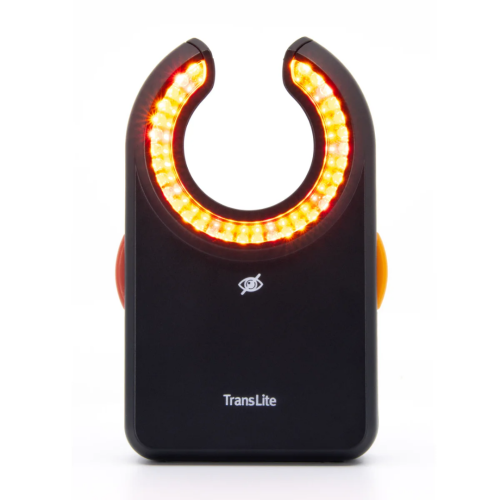
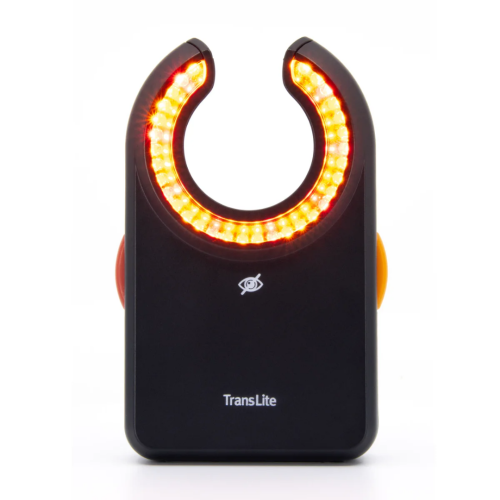
The LEDX was specifically engineered for vein treatment procedures. Its 32 high-intensity LEDs deliver the brightest illumination in the Veinlite line, producing high-contrast imaging that makes spider veins, varicose veins, and feeder vessels clearly visible through the skin.
Key features for sclerotherapy:
- 32 LED configuration – maximum brightness and clarity for detailed vein mapping
- Largest viewing area in the Veinlite range – map broader treatment zones without repositioning
- Deeper focus – visualize feeder vessels and deeper structures beyond what’s visible on the surface
- C-shaped opening – provides direct, unobstructed access to the target vein during sclerosant injection, so you maintain visualization throughout the procedure
- High-contrast imaging – clearly distinguishes venous structures from surrounding tissue across all skin tones
- Rechargeable battery – sustained power for full clinic sessions without interruption
The LEDX’s C-shaped design is particularly valuable in sclerotherapy because it solves a practical problem: you need to see the vein and access it at the same time. The open configuration allows needle insertion directly through the device’s field, so you’re never working blind between the visualization and injection steps.
At $1,337.45, the LEDX is a professional-grade investment for clinics where sclerotherapy is a regular part of the treatment mix.
View the Veinlite® LEDX on Surgo →
Complete Your Sclerotherapy Kit
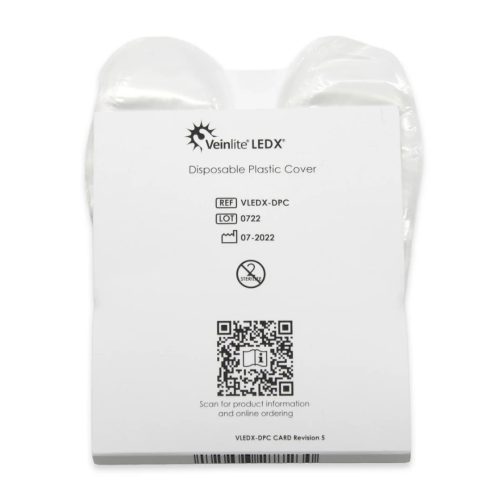
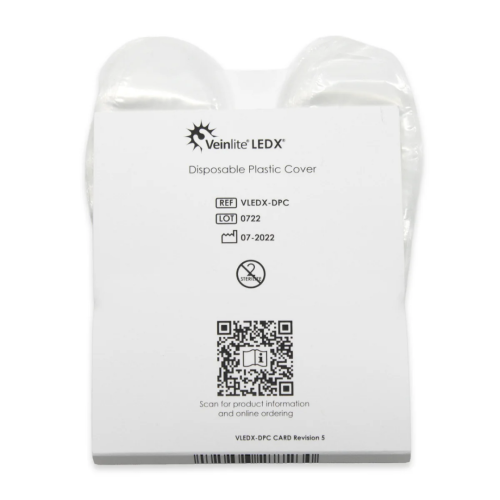
Veinlite® LEDX Disposable Covers — Pack of 50 (201-LEDX-DPC) | $58.80
Single-use, latex-free plastic covers designed specifically for the LEDX’s C-shaped configuration. These sanitary barriers maintain full device functionality while preventing patient-to-patient cross-contamination – essential for multi-patient clinic days and compliance with Health Canada infection control requirements.
50 covers per pack means 50 fully protected procedures. For a busy vein clinic, maintaining adequate stock prevents procedural delays and keeps your protocols audit-ready.
LEDX Veinlite Carrying Case (201-LEDX-CC)
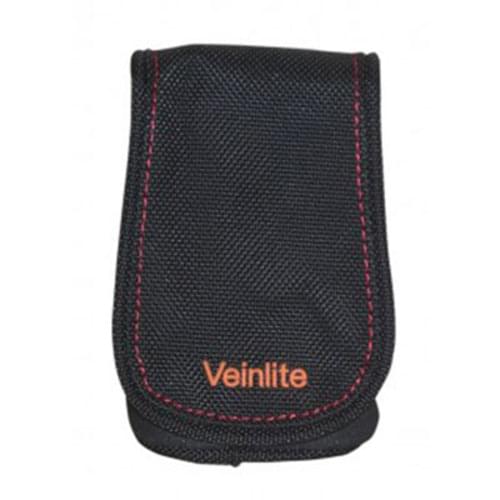
Purpose-built storage and transport for the LEDX device. Keeps your equipment protected between sessions, organized within your treatment space, and ready to move between rooms or satellite clinic locations.
Building a Reliable Vein Treatment Toolkit
For clinics offering sclerotherapy as a core service, the right equipment makes a measurable difference in outcomes and workflow. The complete Veinlite LEDX kit – device, disposable covers, and carrying case – gives you everything needed to visualize, treat, and maintain your equipment to professional standards.
The bottom line is straightforward: better visualization leads to more precise injection placement, fewer retreatments, and better patient outcomes. In a competitive aesthetic medicine landscape, consistent results and an efficient treatment experience are what build patient loyalty and referrals.
Frequently Asked Questions
How does vein visualization technology improve sclerotherapy outcomes?
Transillumination devices pass LED light through the skin to reveal veins – including deeper feeder vessels – in real time. This allows more precise injection placement and more complete treatment of the underlying venous network, reducing the number of sessions needed.
Why do spider veins come back after sclerotherapy?
Recurrence is most often caused by untreated feeder veins. These connecting vessels aren’t always visible on the surface, but they feed the spider veins you can see. A vein finder helps identify and map feeder veins before treatment so they can be addressed in the same sessions.
Does a vein finder work on all skin tones?
Yes. Transillumination-based devices like the Veinlite LEDX work across all skin tones and patient types. This gives them a clinical advantage over some NIR systems, which can struggle with highly pigmented skin.
What’s the difference between transillumination and NIR vein finders?
Transillumination passes LED light through the skin to create a direct, real-time view of venous structures. NIR devices use infrared light and project a digital overlay onto the skin. Clinical data shows transillumination achieves 93% first-attempt success rates versus 45% with NIR – a significant difference for procedure-heavy clinical settings.
How do I maintain infection control with a reusable vein finder?
Use a fresh single-use disposable cover for every patient. The Veinlite LEDX Disposable Covers (201-LEDX-DPC) are designed specifically for the LEDX’s C-shaped configuration and are latex-free. One cover per procedure keeps your clinic compliant with Health Canada infection control standards.
Where can I buy the Veinlite LEDX in Canada?
The Veinlite LEDX (201-LEDX), LEDX Disposable Covers (201-LEDX-DPC), and LEDX Carrying Case (201-LEDX-CC) are available through Surgo Surgical Supply, the authorized Canadian distributor of Veinlite products.
Surgo Surgical Supply is the authorized Canada distributor of Veinlite vein visualization products. All products are for professional medical use only. Consult Health Canada guidelines and your professional regulatory body for infection control and clinical practice standards applicable to your setting.
Explore Veinlite Vein Finders from Surgo Surgical Supply → www.surgo.com


Spider veins and varicose veins affect millions of Canadians – and for many, sclerotherapy is the treatment of choice. It’s minimally invasive, highly effective, and when done well, delivers results that genuinely improve quality of life. But “when done well” is the critical phrase. The precision required for successful sclerotherapy starts long before the needle enters the skin. It starts with how well you can see the vein.
Vein visualization technology has changed what’s possible in treatment clinics. Here’s what you need to know about how it works, why it matters for sclerotherapy specifically, and what to look for when choosing a device for your practice.
What Is Sclerotherapy – and Who Is It For?
Sclerotherapy is a minimally invasive procedure used to treat spider veins and varicose veins. A sclerosant solution is injected directly into the target vein, causing the vessel walls to collapse and the vein to gradually fade. Over a series of sessions, treated veins are reabsorbed by the body.
It’s a well-established treatment used by phlebologists, vascular surgeons, dermatologists, and aesthetic medicine practitioners. Patients seek it out for both medical and cosmetic reasons – from alleviating symptoms like aching and swelling to improving the appearance of their legs. Demand is consistent, and outcomes are largely technique-dependent.
The Importance of Accurate Vein Mapping Before Treatment
Sclerotherapy requires precise injection placement. The sclerosant needs to reach the target vessel – not adjacent tissue, not a feeder vein that’s been misidentified, not a vein that’s deeper or shallower than it appears.
Inaccurate injection placement leads to a range of problems: incomplete treatment, tissue necrosis, skin staining, or the need for retreatment. From a patient experience standpoint, poor precision means more sessions, more discomfort, and a longer road to results. From a practice standpoint, it means reduced efficiency and lower patient satisfaction.
Accurate vein mapping before and during treatment is the foundation of good sclerotherapy outcomes. And accurate vein mapping depends on how clearly you can see the vessels you’re treating.
The Challenges of Treating Spider Veins and Varicose Veins
Spider veins are small and close to the surface, but that doesn’t make them easy to target. They can be faint, clustered, or located in areas where skin tone or texture makes visual inspection unreliable. Varicose veins are larger but often connected to a network of feeder vessels that aren’t visible to the naked eye – treating only what you can see without addressing the underlying feeders leads to recurrence.
Practitioners also face variability between patients. Skin tone, body composition, prior treatment history, and the specific pattern of venous insufficiency all affect how clearly veins present on the surface. A technique that works well on one patient may be much harder to apply on another.
Traditional visual inspection and palpation have real limits in this context. They’re subjective, they rely heavily on operator experience, and they simply don’t reveal the complete venous picture.
How Visualization Improves Injection Precision and Reduces Retreatment
Vein visualization technology addresses these limitations directly. Devices that use transillumination – passing light through the skin to illuminate underlying vessels – allow practitioners to see vein structures that would otherwise be invisible or ambiguous.
With a clear, real-time view of the target vein and its surrounding architecture, you can:
- Confirm the location and depth of the vessel before injection
- Identify feeder veins connected to visible spider veins, enabling more complete treatment
- Avoid adjacent structures and reduce the risk of misplaced injections
- Track sclerosant distribution more accurately during the procedure
- Reduce the number of sessions needed by treating more comprehensively from the start
The result is higher precision, fewer complications, and better outcomes – for your patients and for your practice efficiency.
What to Look for in a Vein Visualization Tool for Aesthetic Clinics
Not all vein finders are suited to the specific demands of sclerotherapy. When evaluating devices for an aesthetic or vein treatment clinic, consider the following:
Visualization area. Sclerotherapy often involves treating clusters of spider veins across a broader surface area. A device with a large viewing field lets you map more of the treatment zone at once, improving both efficiency and thoroughness.
Image contrast and depth. You need to clearly differentiate the target vessel from surrounding tissue. High contrast imaging and the ability to visualize veins at varying depths – including feeder vessels below the surface – is essential.
C-shaped or open design. For sclerotherapy, you need direct access to the vein during injection. A device with an open configuration allows you to maintain visualization while inserting the needle, rather than having to remove the device and work from memory.
Portability and ergonomics. Sclerotherapy sessions involve treating multiple sites, often on standing or repositioned patients. A device that’s easy to handle and move between sites keeps the workflow smooth.
Infection control. Any device used on multiple patients requires a reliable single-use barrier system to prevent cross-contamination and meet Health Canada standards.
Spotlight: Veinlite® LEDX Vein Finder 32 LED Model
For sclerotherapy applications, the Veinlite® LEDX (201-LEDX) is the purpose-built choice.
The LEDX was specifically engineered for vein treatment procedures. Its 32 high-intensity LEDs deliver the brightest illumination in the Veinlite line, producing high-contrast imaging that makes spider veins, varicose veins, and feeder vessels clearly visible through the skin.
Key features for sclerotherapy:
- 32 LED configuration – maximum brightness and clarity for detailed vein mapping
- Largest viewing area in the Veinlite range – map broader treatment zones without repositioning
- Deeper focus – visualize feeder vessels and deeper structures beyond what’s visible on the surface
- C-shaped opening – provides direct, unobstructed access to the target vein during sclerosant injection, so you maintain visualization throughout the procedure
- High-contrast imaging – clearly distinguishes venous structures from surrounding tissue across all skin tones
- Rechargeable battery – sustained power for full clinic sessions without interruption
The LEDX’s C-shaped design is particularly valuable in sclerotherapy because it solves a practical problem: you need to see the vein and access it at the same time. The open configuration allows needle insertion directly through the device’s field, so you’re never working blind between the visualization and injection steps.
At $1,337.45, the LEDX is a professional-grade investment for clinics where sclerotherapy is a regular part of the treatment mix.
View the Veinlite® LEDX on Surgo →
Complete Your Sclerotherapy Kit
Veinlite® LEDX Disposable Covers — Pack of 50 (201-LEDX-DPC) | $58.80
Single-use, latex-free plastic covers designed specifically for the LEDX’s C-shaped configuration. These sanitary barriers maintain full device functionality while preventing patient-to-patient cross-contamination – essential for multi-patient clinic days and compliance with Health Canada infection control requirements.
50 covers per pack means 50 fully protected procedures. For a busy vein clinic, maintaining adequate stock prevents procedural delays and keeps your protocols audit-ready.
LEDX Veinlite Carrying Case (201-LEDX-CC)
Purpose-built storage and transport for the LEDX device. Keeps your equipment protected between sessions, organized within your treatment space, and ready to move between rooms or satellite clinic locations.
Building a Reliable Vein Treatment Toolkit
For clinics offering sclerotherapy as a core service, the right equipment makes a measurable difference in outcomes and workflow. The complete Veinlite LEDX kit – device, disposable covers, and carrying case – gives you everything needed to visualize, treat, and maintain your equipment to professional standards.
The bottom line is straightforward: better visualization leads to more precise injection placement, fewer retreatments, and better patient outcomes. In a competitive aesthetic medicine landscape, consistent results and an efficient treatment experience are what build patient loyalty and referrals.
Frequently Asked Questions
How does vein visualization technology improve sclerotherapy outcomes?
Transillumination devices pass LED light through the skin to reveal veins – including deeper feeder vessels – in real time. This allows more precise injection placement and more complete treatment of the underlying venous network, reducing the number of sessions needed.
Why do spider veins come back after sclerotherapy?
Recurrence is most often caused by untreated feeder veins. These connecting vessels aren’t always visible on the surface, but they feed the spider veins you can see. A vein finder helps identify and map feeder veins before treatment so they can be addressed in the same sessions.
Does a vein finder work on all skin tones?
Yes. Transillumination-based devices like the Veinlite LEDX work across all skin tones and patient types. This gives them a clinical advantage over some NIR systems, which can struggle with highly pigmented skin.
What’s the difference between transillumination and NIR vein finders?
Transillumination passes LED light through the skin to create a direct, real-time view of venous structures. NIR devices use infrared light and project a digital overlay onto the skin. Clinical data shows transillumination achieves 93% first-attempt success rates versus 45% with NIR – a significant difference for procedure-heavy clinical settings.
How do I maintain infection control with a reusable vein finder?
Use a fresh single-use disposable cover for every patient. The Veinlite LEDX Disposable Covers (201-LEDX-DPC) are designed specifically for the LEDX’s C-shaped configuration and are latex-free. One cover per procedure keeps your clinic compliant with Health Canada infection control standards.
Where can I buy the Veinlite LEDX in Canada?
The Veinlite LEDX (201-LEDX), LEDX Disposable Covers (201-LEDX-DPC), and LEDX Carrying Case (201-LEDX-CC) are available through Surgo Surgical Supply, the authorized Canadian distributor of Veinlite products.
Surgo Surgical Supply is the authorized Canada distributor of Veinlite vein visualization products. All products are for professional medical use only. Consult Health Canada guidelines and your professional regulatory body for infection control and clinical practice standards applicable to your setting.
Explore Veinlite Vein Finders from Surgo Surgical Supply → www.surgo.com
