
When paramedics start an IV in a hospital bay, they’ve got good lighting, a stable patient, and everything within arm’s reach. Start the same IV on the shoulder of a highway at 2a.m., in the back of a moving ambulance, or in a patient’s dimly lit apartment — and the job changes completely.
For EMS crews and paramedics across Canada, field IV access happens in conditions that are anything but ideal: unpredictable lighting, confined spaces, unstable patients, and a clock that’s always running. Getting it right on the first attempt isn’t just a matter of skill — it depends on having equipment built for the realities of prehospital care, not equipment borrowed from a clinic setting.
And it doesn’t stop at getting the needle in. Field crews move from patient to patient, call to call, often with little time between encounters — which makes infection prevention practices aligned with Health Canada guidance just as critical as speed.
The Unique Challenges of IV Access in Emergency Settings
Hospitals give clinicians control: stable lighting, a still patient, a flat surface, backup within shouting distance. EMS crews rarely get any of that. Field calls typically mean:
- Tight, awkward spaces – ambulance interiors, vehicles, doorways, stairwells
- Inconsistent or poor lighting
- A patient who’s moving, being transported, or can’t stay still
- Pressure to work fast under high-stress conditions
Put those together and even a seasoned paramedic can lose precious seconds, or attempts, trying to see and stabilize a vein that would be routine in a clinic.
Low-Light Environments, Moving Vehicles, and Unstable Patients
Three factors do the most damage to field IV success: light, movement, and patient stability.
Night calls, scene lighting that flickers or throws odd shadows, the jostle of a moving rig, a patient who’s unconscious, agitated, or in acute distress — any one of these makes a vein harder to locate. Stack them together and precision insertion gets genuinely difficult, no matter how many years of experience a provider has.
This is exactly the gap that portable vein illumination is built to close — not a nice-to-have, but a practical answer to conditions EMS crews face on nearly every shift.
Time Pressure in Critical Care: Why Speed Matters
In prehospital care, time drives outcomes. A delay in securing IV access can push back:
- Medication administration
- Fluid resuscitation
- Patient stabilization
- The overall trajectory of care before hospital handoff
A missed stick isn’t just an inconvenience — repeated attempts eat into scene time that critical patients don't have. Getting the line in on the first try shortens time on scene, gets treatment started sooner, and keeps the whole call moving under control.
How Portability Changes What’s Possible in the Field
Clinical settings can lean on wall-mounted lighting, fixed workstations, and a full tray of tools within reach. None of that translates to the field. Gear that works on scene has to be:
- Grab-and-go portable
- Immediately ready, with no setup or warm-up
- Operable one-handed, since the other hand is often stabilizing the patient
- Durable enough for repeated use across a shift
Corded or outlet-dependent devices simply don’t belong in a jump bag.
Battery-Powered Tools vs. Clinic-Dependent Equipment
A lot of vein visualization equipment on the market is designed with a stationary setting in mind — plugged in, sitting on a cart, staying in one room. That doesn't hold up in EMS work.
Battery-powered devices solve this by offering:
- Full mobility, wherever the call takes the crew
- Instant use, no waiting for power or setup
- Dependable performance during transport, roadside, or in remote locations
Equipment purpose-built for field conditions consistently outperforms tools that were designed for a clinic and simply pressed into EMS use.
Using the Built-In Exam Light Feature in Low Visibility Situations
Poor lighting is one of the most underrated obstacles in field IV access — and it affects more than just finding the vein. It slows down patient assessment too.
A device with a built-in white exam light solves two problems at once: it helps crews see vein structure clearly for insertion, and it doubles as an assessment light for checking pupils, wounds, or general patient status — without pulling out a second tool mid-call.
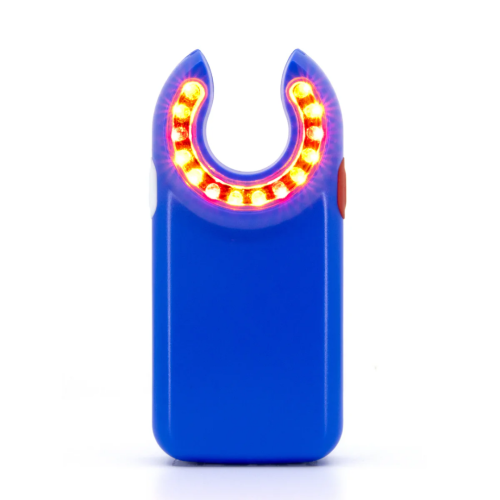
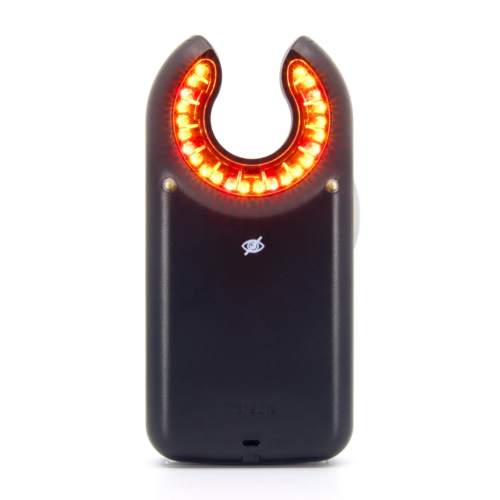
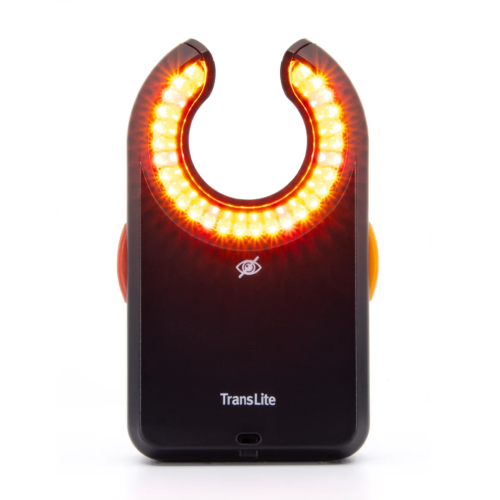
Veinlite EMS PRO Portable Vein Finder (201-VEMSPRO)
The Veinlite EMS PRO was built around exactly the conditions Canadian EMS crews deal with every shift — low light, tight quarters, and patients who need fast, accurate access.
Well-suited for:
- Paramedics and EMTs
- Emergency departments
- Fire department medical response units
- Critical care transport crews
- Remote and tactical medical teams
What makes it work in the field:
- Compact and portable – fits directly into an EMS kit, ready to deploy without delay
- Battery-powered (2 AA) - no cords, no outlets, no setup time
- 24-LED illumination – strong vein visibility across a wide range of patient types and skin tones
- Built-in white exam light – supports both insertion and quick patient assessment in low-visibility settings
- Extended battery life – built to hold up through long shifts and back-to-back calls
- Compatible with Veinlite EMS/EMS PRO disposable covers (add link) - supports infection prevention practices consistent with Health Canada guidance in high-turnover field settings
.jpeg)
What It Changes for EMS Crews
With the EMS PRO in the kit, crews can:
- Locate veins faster, even in poor conditions
- Cut down on failed attempts
- Improve first-success under pressure
- Get treatment started with less delay
- Work with more confidence in chaotic environments
It also supports better infection control on the road. Because EMS crews move quickly between patients with limited time to sanitize between calls, single-use disposable covers reduce cross-contamination risk and help teams stay aligned with Health Canada’s infection prevention recommendations.
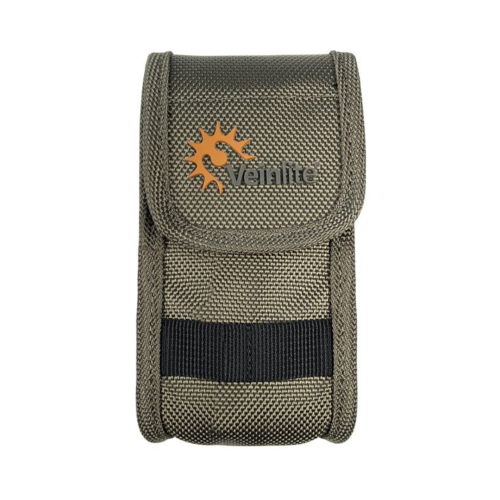
Veinlite Universal MOLLE Carrying Case (201-VLCC)
A great device is only as useful as a crew’s ability to get to it fast. The Veinlite Universal MOLLE Carrying Case is designed to solve exactly that problem — it mounts directly onto MOLLE-compatible tactical vests, EMS packs, and jump bags, keeping the EMS PRO secured, protected, and within immediate reach on scene.
For crews building out field kits, this isn't just storage — it's part of the workflow. A device that's buried at the bottom of a bag costs precious seconds on a call; one that's clipped to the outside of a pack is ready the moment it's needed.
Why it matters for field kits:
- Keeps the vein finder secured and protected during transport, rough handling, and repeated use
- Mounts directly to tactical and MOLLE-compatible gear, so it’s accessible without digging through a bag
- Frees up hands and attention for patient care instead of equipment management
- Supports a standardized, grab-and-go kit setup across an entire EMS team
The Case for Standardizing Vein Visualization in EMS Kits
A lot of services still rely entirely on traditional palpation-based technique, even in the toughest field conditions. But as visualization technology becomes more accessible, more EMS organizations are choosing to standardize it across their fleets.
What standardization delivers:
- More consistent first-stick success across the whole team, not just senior providers
- Smaller skill gap between veteran and newer staff
- Better patient outcomes overall
- Less wasted supply from failed attempts
- More confidence for providers early in their careers
- Stronger alignment with infection control protocols
Bringing a tool like the EMS PRO into standard-issue kits gives an entire service — not just individual providers — a more reliable approach to field IV access.
Building a Reliable Field Kit
A dependable EMS kit isn’t just about having supplies — it's about having the right supplies, organized for speed. When building or upgrading a kit, crews should include:
- A complete IV start kit— catheters, prep supplies, dressings
- Backup supplies for high-volume shifts
- A portable light source
- A vein visualization device suited for field work
- Single-use disposable covers for hygienic use across patients
- A secure, mountable way to carry the device – like the MOLLE Carrying Case above – so it’s accessible the second it’s needed
Every choice should come back to the same priorities: speed, portability, durability, ease of use under pressure, and infection control.
Key Takeaways
Reliable field IV access comes down to preparation as much as skill. Crews and services should focus on:
- Adapting technique to unpredictable field conditions
- Improving visibility in low-light scenes
- Cutting delays during critical calls
- Choosing portable, battery-powered equipment
- Standardizing tools across the whole team, not just individual providers
Equip Your Team for Reliable Field IV Access
Every second matters in emergency care, and every attempt counts. The Veinlite EMS PRO Portable Vein Finder gives Canadian EMS crews a purpose-built way to improve first-stick success and reduce delays, even in the field’s toughest conditions.
Paired with disposable covers that support Health Canada-aligned infection prevention practices, it helps teams protect both performance and patient safety on every call.
Explore Veinlite solutions at Surgo Surgical Supply and equip your team for dependable IV access in the field.
FAQ
What’s the best vein finder for EMS and paramedics in Canada?
Portable, purpose-built devices like the Veinlite EMS PRO are designed to improve vein visibility in the low-light, high-pressure conditions EMS crews face on scene. Battery-powered lightweight models are generally preferred because they’re easy to carry and ready for immediate use.
Why does portable vein visualization matter for EMS work?
EMS providers work in ambulances, private homes, roadside scenes, and other unpredictable settings where lighting and patient positioning are rarely ideal. Portable vein finders provide instant illumination without needing external power or bulky setup.
Can a vein finder be used inside a moving ambulance?
Yes. Battery-powered vein finders are built for mobile use and can be used during transport, inside a moving unit, or on scene where power outlets simply aren’t available.
What should EMS providers look for in a field-ready vein finder?
Key features include portability, battery power, strong LED illumination, a built-in exam light, durability, long battery life, and compatibility with disposable covers for infection control.
Does the Veinlite EMS PRO perform well in low light?
Yes. Its built-in white exam light combined with 24-LED illumination makes it easier to locate veins on night calls, inside ambulances, or in other poorly lit environments.
Are disposable covers necessary for portable vein finders?
Yes. Single-use covers reduce cross-contamination risk between patients and support infection prevention practices consistent with Health Canada guidance.
Can vein finders help with genuinely difficult IV access?
Yes. Vein visualization technology improves the ability to see superficial veins, which can help clinicians establish access more effectively in patients with challenging venous anatomy.



When paramedics start an IV in a hospital bay, they’ve got good lighting, a stable patient, and everything within arm’s reach. Start the same IV on the shoulder of a highway at 2a.m., in the back of a moving ambulance, or in a patient’s dimly lit apartment — and the job changes completely.
For EMS crews and paramedics across Canada, field IV access happens in conditions that are anything but ideal: unpredictable lighting, confined spaces, unstable patients, and a clock that’s always running. Getting it right on the first attempt isn’t just a matter of skill — it depends on having equipment built for the realities of prehospital care, not equipment borrowed from a clinic setting.
And it doesn’t stop at getting the needle in. Field crews move from patient to patient, call to call, often with little time between encounters — which makes infection prevention practices aligned with Health Canada guidance just as critical as speed.
The Unique Challenges of IV Access in Emergency Settings
Hospitals give clinicians control: stable lighting, a still patient, a flat surface, backup within shouting distance. EMS crews rarely get any of that. Field calls typically mean:
- Tight, awkward spaces – ambulance interiors, vehicles, doorways, stairwells
- Inconsistent or poor lighting
- A patient who’s moving, being transported, or can’t stay still
- Pressure to work fast under high-stress conditions
Put those together and even a seasoned paramedic can lose precious seconds, or attempts, trying to see and stabilize a vein that would be routine in a clinic.
Low-Light Environments, Moving Vehicles, and Unstable Patients
Three factors do the most damage to field IV success: light, movement, and patient stability.
Night calls, scene lighting that flickers or throws odd shadows, the jostle of a moving rig, a patient who’s unconscious, agitated, or in acute distress — any one of these makes a vein harder to locate. Stack them together and precision insertion gets genuinely difficult, no matter how many years of experience a provider has.
This is exactly the gap that portable vein illumination is built to close — not a nice-to-have, but a practical answer to conditions EMS crews face on nearly every shift.
Time Pressure in Critical Care: Why Speed Matters
In prehospital care, time drives outcomes. A delay in securing IV access can push back:
- Medication administration
- Fluid resuscitation
- Patient stabilization
- The overall trajectory of care before hospital handoff
A missed stick isn’t just an inconvenience — repeated attempts eat into scene time that critical patients don't have. Getting the line in on the first try shortens time on scene, gets treatment started sooner, and keeps the whole call moving under control.
How Portability Changes What’s Possible in the Field
Clinical settings can lean on wall-mounted lighting, fixed workstations, and a full tray of tools within reach. None of that translates to the field. Gear that works on scene has to be:
- Grab-and-go portable
- Immediately ready, with no setup or warm-up
- Operable one-handed, since the other hand is often stabilizing the patient
- Durable enough for repeated use across a shift
Corded or outlet-dependent devices simply don’t belong in a jump bag.
Battery-Powered Tools vs. Clinic-Dependent Equipment
A lot of vein visualization equipment on the market is designed with a stationary setting in mind — plugged in, sitting on a cart, staying in one room. That doesn't hold up in EMS work.
Battery-powered devices solve this by offering:
- Full mobility, wherever the call takes the crew
- Instant use, no waiting for power or setup
- Dependable performance during transport, roadside, or in remote locations
Equipment purpose-built for field conditions consistently outperforms tools that were designed for a clinic and simply pressed into EMS use.
Using the Built-In Exam Light Feature in Low Visibility Situations
Poor lighting is one of the most underrated obstacles in field IV access — and it affects more than just finding the vein. It slows down patient assessment too.
A device with a built-in white exam light solves two problems at once: it helps crews see vein structure clearly for insertion, and it doubles as an assessment light for checking pupils, wounds, or general patient status — without pulling out a second tool mid-call.
Veinlite EMS PRO Portable Vein Finder (201-VEMSPRO)
The Veinlite EMS PRO was built around exactly the conditions Canadian EMS crews deal with every shift — low light, tight quarters, and patients who need fast, accurate access.
Well-suited for:
- Paramedics and EMTs
- Emergency departments
- Fire department medical response units
- Critical care transport crews
- Remote and tactical medical teams
What makes it work in the field:
- Compact and portable – fits directly into an EMS kit, ready to deploy without delay
- Battery-powered (2 AA) - no cords, no outlets, no setup time
- 24-LED illumination – strong vein visibility across a wide range of patient types and skin tones
- Built-in white exam light – supports both insertion and quick patient assessment in low-visibility settings
- Extended battery life – built to hold up through long shifts and back-to-back calls
- Compatible with Veinlite EMS/EMS PRO disposable covers (add link) - supports infection prevention practices consistent with Health Canada guidance in high-turnover field settings
What It Changes for EMS Crews
With the EMS PRO in the kit, crews can:
- Locate veins faster, even in poor conditions
- Cut down on failed attempts
- Improve first-success under pressure
- Get treatment started with less delay
- Work with more confidence in chaotic environments
It also supports better infection control on the road. Because EMS crews move quickly between patients with limited time to sanitize between calls, single-use disposable covers reduce cross-contamination risk and help teams stay aligned with Health Canada’s infection prevention recommendations.
Veinlite Universal MOLLE Carrying Case (201-VLCC)
A great device is only as useful as a crew’s ability to get to it fast. The Veinlite Universal MOLLE Carrying Case is designed to solve exactly that problem — it mounts directly onto MOLLE-compatible tactical vests, EMS packs, and jump bags, keeping the EMS PRO secured, protected, and within immediate reach on scene.
For crews building out field kits, this isn't just storage — it's part of the workflow. A device that's buried at the bottom of a bag costs precious seconds on a call; one that's clipped to the outside of a pack is ready the moment it's needed.
Why it matters for field kits:
- Keeps the vein finder secured and protected during transport, rough handling, and repeated use
- Mounts directly to tactical and MOLLE-compatible gear, so it’s accessible without digging through a bag
- Frees up hands and attention for patient care instead of equipment management
- Supports a standardized, grab-and-go kit setup across an entire EMS team
The Case for Standardizing Vein Visualization in EMS Kits
A lot of services still rely entirely on traditional palpation-based technique, even in the toughest field conditions. But as visualization technology becomes more accessible, more EMS organizations are choosing to standardize it across their fleets.
What standardization delivers:
- More consistent first-stick success across the whole team, not just senior providers
- Smaller skill gap between veteran and newer staff
- Better patient outcomes overall
- Less wasted supply from failed attempts
- More confidence for providers early in their careers
- Stronger alignment with infection control protocols
Bringing a tool like the EMS PRO into standard-issue kits gives an entire service — not just individual providers — a more reliable approach to field IV access.
Building a Reliable Field Kit
A dependable EMS kit isn’t just about having supplies — it's about having the right supplies, organized for speed. When building or upgrading a kit, crews should include:
- A complete IV start kit— catheters, prep supplies, dressings
- Backup supplies for high-volume shifts
- A portable light source
- A vein visualization device suited for field work
- Single-use disposable covers for hygienic use across patients
- A secure, mountable way to carry the device – like the MOLLE Carrying Case above – so it’s accessible the second it’s needed
Every choice should come back to the same priorities: speed, portability, durability, ease of use under pressure, and infection control.
Key Takeaways
Reliable field IV access comes down to preparation as much as skill. Crews and services should focus on:
- Adapting technique to unpredictable field conditions
- Improving visibility in low-light scenes
- Cutting delays during critical calls
- Choosing portable, battery-powered equipment
- Standardizing tools across the whole team, not just individual providers
Equip Your Team for Reliable Field IV Access
Every second matters in emergency care, and every attempt counts. The Veinlite EMS PRO Portable Vein Finder gives Canadian EMS crews a purpose-built way to improve first-stick success and reduce delays, even in the field’s toughest conditions.
Paired with disposable covers that support Health Canada-aligned infection prevention practices, it helps teams protect both performance and patient safety on every call.
Explore Veinlite solutions at Surgo Surgical Supply and equip your team for dependable IV access in the field.
FAQ
What’s the best vein finder for EMS and paramedics in Canada?
Portable, purpose-built devices like the Veinlite EMS PRO are designed to improve vein visibility in the low-light, high-pressure conditions EMS crews face on scene. Battery-powered lightweight models are generally preferred because they’re easy to carry and ready for immediate use.
Why does portable vein visualization matter for EMS work?
EMS providers work in ambulances, private homes, roadside scenes, and other unpredictable settings where lighting and patient positioning are rarely ideal. Portable vein finders provide instant illumination without needing external power or bulky setup.
Can a vein finder be used inside a moving ambulance?
Yes. Battery-powered vein finders are built for mobile use and can be used during transport, inside a moving unit, or on scene where power outlets simply aren’t available.
What should EMS providers look for in a field-ready vein finder?
Key features include portability, battery power, strong LED illumination, a built-in exam light, durability, long battery life, and compatibility with disposable covers for infection control.
Does the Veinlite EMS PRO perform well in low light?
Yes. Its built-in white exam light combined with 24-LED illumination makes it easier to locate veins on night calls, inside ambulances, or in other poorly lit environments.
Are disposable covers necessary for portable vein finders?
Yes. Single-use covers reduce cross-contamination risk between patients and support infection prevention practices consistent with Health Canada guidance.
Can vein finders help with genuinely difficult IV access?
Yes. Vein visualization technology improves the ability to see superficial veins, which can help clinicians establish access more effectively in patients with challenging venous anatomy.
