
Infection Control Best Practices for IV Procedures
Every IV insertion and venipuncture procedure carries an infection control responsibility that goes beyond the needle itself. The equipment used to locate the vein — including vein visualization devices — comes into direct contact with patient skin repeatedly through a shift, which makes it just as much a part of the infection prevention conversation as gloves, catheters, or prep swabs.
For Canadian clinical teams and EMS crews, building consistent infection control practices around vein finder use isn’t an afterthought. It’s a core part of protecting patients, protecting staff, and meeting the standards expected of any reusable clinical device.
Why Infection Control Is Critical in IV and Venipuncture Procedures
IV and venipuncture procedures break the skin barrier, which makes proper infection control non-negotiable at every step. Beyond needle and catheter handling, this includes:
- Hand hygiene before and after every patient contact
- Proper skin antisepsis at the insertion site
- Safe handling and disposal of sharps
- Barrier protection for any reusable device that contacts patient skin, including vein visualization tools
That last point is often the one facilities overlook. A vein finder used across dozens of patients in a single shift is a direct contact device – and needs to be treated with the same infection control rigor as any other piece of reusable clinical equipment.
The Real Risks of Cross-Contamination in Reusable Equipment
Reusable medical devices offer clear practical and cost advantages, but they also introduce a contamination pathway if not properly managed between uses. For vein finders specifically, the risks include:
- Transfer of pathogens between patients through direct device-to-skin contact
- Cross-contamination in high-volume settings, where a device may touch dozens of patients per shift
- Increased risk in EMS environments, where time between patient encounters if often minimal
- Compliance failures that put a facility at risk during infection control audits
None of this means reusable devices should be avoided – it means the barrier protecting each patient contact needs to be treated as a mandatory step, not an optional one.
Overview of Relevant Infection Control Guidelines
Canadian clinical teams generally align infection control practices for vein visualization devices with guidance from Health Canada, alongside standard hospital and provincial infection prevention and control (IPAC) protocols. These guidelines generally emphasize:
- Single-use barriers wherever a device contacts intact or non-intact skin repeatedly across patients
- Documented, repeatable infection control workflows rather than ad-hoc practices
- Clear accountability for who applied, removes, and disposes of barrier covers
- Regular compliance review as part of broader infection prevention programs
Building vein finder use into an existing IPAC framework, rather than treating it as a separate consideration, keeps compliance consistent across a facility or EMS service.
Single-Use Barriers: What They Are and Why They Matter
A single-use disposable cover creates a physical barrier between a vein finder and each patient’s skin, eliminating the need for cleaning or sterilization between used. Properly used, single-use barriers:
- Prevent direct patient-to-device-to-patient contact
- Remove the risk of inadequate manual cleaning between encounters
- Support fast turnaround in high-volume or high-pressure clinical and field settings
- Provide a simple, auditable compliance step – apply, use, remove, dispose
For any facility or EMS team running a vein finder across multiple patients per shift, single-use covers aren’t an accessory. They’re the infection control step that makes reusable devices safe to use at all.
Veinlite Disposable Covers
Surgo Surgical Supply carries dedicated single-use disposable covers matched to each Veinlite device, so every setting – clinical, EMS, or NICU – has the correct barrier option available.
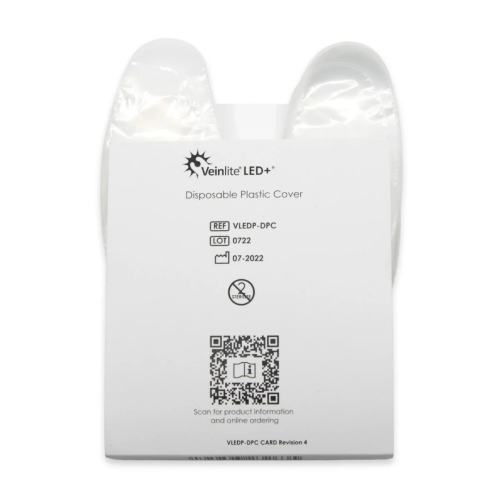
Veinlite LED+ Disposable Covers (201-VLED+DPC)
Designed specifically for the Veinlite LED+, these latex-free covers maintain the device’s side-transillumination performance while providing a complete barrier for every procedure. Suited for medical clinics, dental IV sedation, hospitals, and infusion centers running high patient volumes through a single device.
Veinlite EMS/EMS PRO Disposable Covers (201-VEMS-DPC)
Built for the pace of field and emergency medicine, these covers are engineered for rapid application and removal – critical when EMS crews are moving quickly between calls with little downtime to spare. Compatible with both the Veinlite EMS and EMS PRO devices. 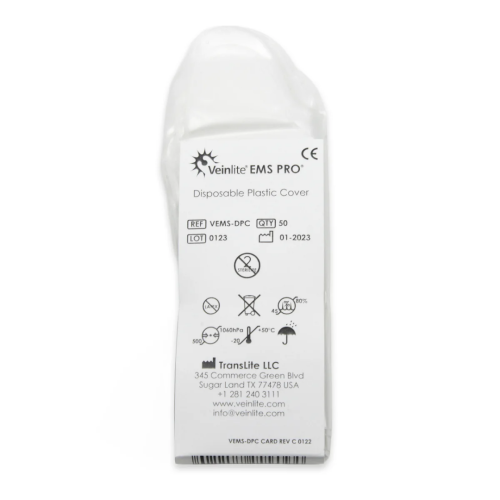
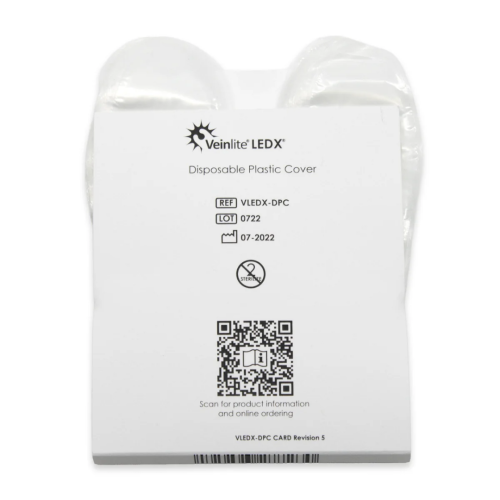
Veinlite LEDX Disposable Covers (201-LEDX-DPC)
Fitted to the LEDX’s C-shaped configuration, these covers maintain optimal light transmission for sclerotherapy and vein treatment procedures, where precision visualization and infection control both matter equally. 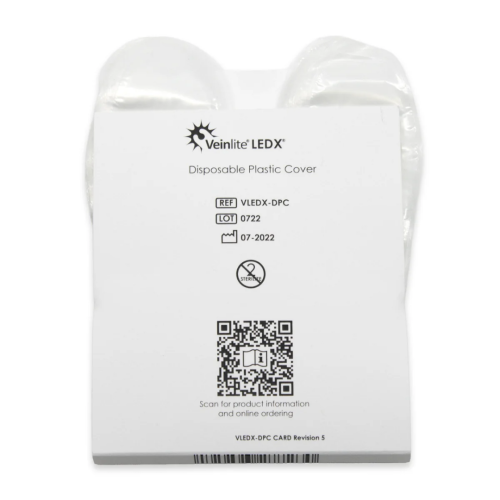
Veinlite NEO / R Disposable Covers (201-VNEO-DPC)
For NICU and newborn nursery settings, where patients are especially vulnerable to cross-contamination, the Veinlite NEO / R Disposable Covers provide a latex-free, single-use barrier sized for the NEO device. Given how sensitive neonatal patients are to infection risk, this is one setting where barrier compliance deserves particularly close attention. 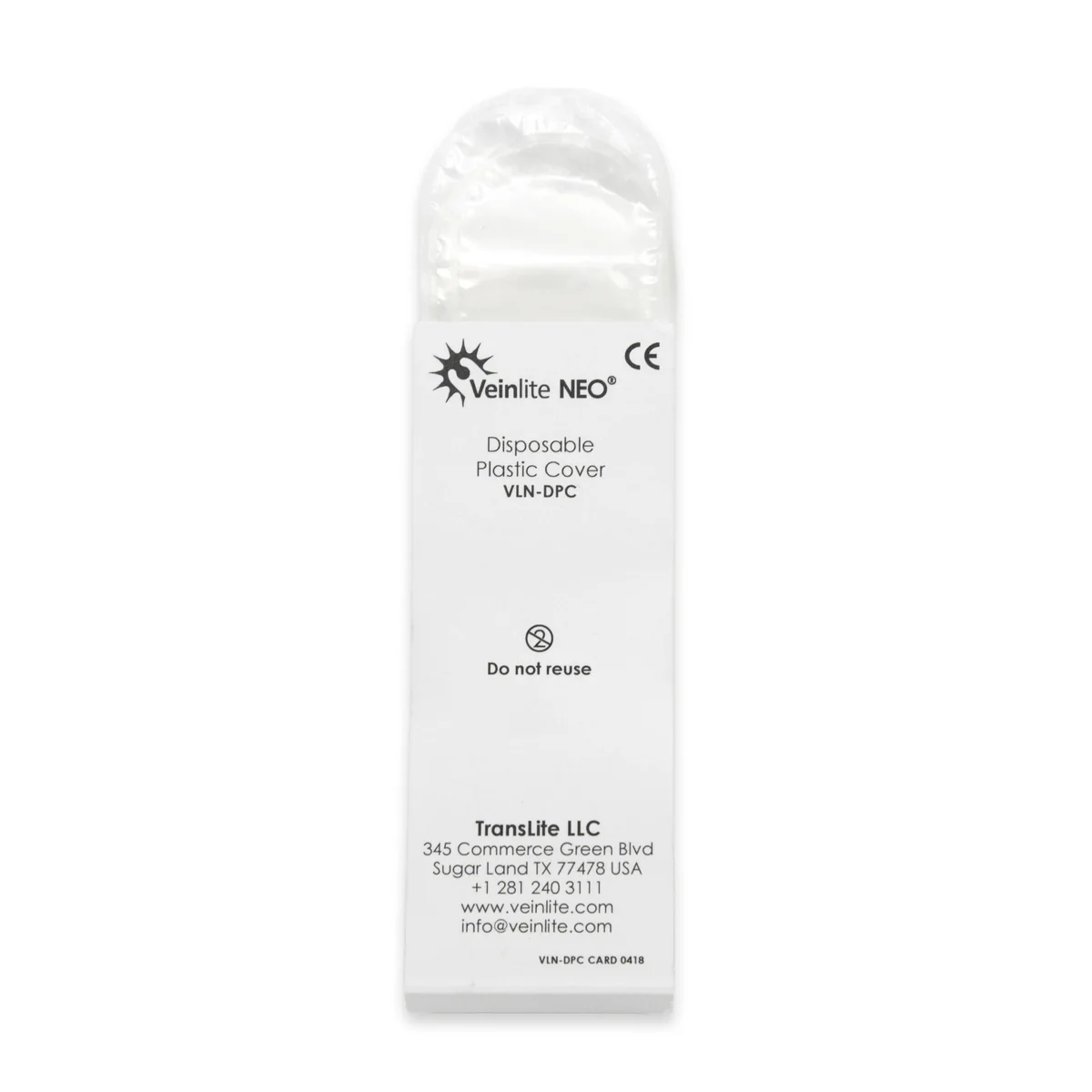
Step-by-Step Infection Control Workflow for Vein Finders
A consistent, repeatable workflow makes infection control compliance easier to maintain and easier to audit. For any Veinlite device:
- Confirm the correct cover for the device – LED+, EMS/EMS PRO, LEDX, and NEO each use a purpose-fitted cover
- Apply a fresh cover before each patient encounter, checking for a secure, complete fit over the device
- Perform the procedure as normal, with the barrier in place throughout
- Remove and dispose of the cover immediately after use, following standard sharps and biohazard waste protocols where applicable
- Visually inspect the device before storing or moving to the next patient
- Restock covers regularly, keeping enough on hand that a low supply never forces a shortcut
Six simple steps, repeated consistently, close the loop on infection control for every single use of the device.
Building Infection Control into Standard Clinical and EMS Protocols
Infection control only works reliably when it’s built into standard workflow, not left to individual discretion. To make single-use barrier compliance a consistent habit across a team:
- Include vein finder barrier use explicitly in onboarding and training materials
- Stock disposable covers alongside other standard IV start supplies, not as a separate line item
- Set clear restocking thresholds so covers are never running low mid-shift
- Include vein finder barrier compliance in routine infection control audits
- For EMS specifically, integrate cover restocking into standard post-call kit checks
When barrier use becomes automatic rather than an extra step to remember, compliance stops depending on any one provider remembering to do it right.
Protect Every Patient Encounter
Infection control isn’t a single action – it’s a consistent standard applied to every device, every patient, every time. Vein visualization devices deserve the same rigor as any other reusable equipment that contacts patient skin.
With dedicated disposable covers for the LED+, EMS/EMS PRO, LEDX, and NEO, Canadian clinical and EMS teams have a purpose-fitted barrier option for every Veinlite device in use – supporting infection prevention practices aligned with Health Canada and provincial IPAC guidance.
Explore Veinlite disposable covers at Surgo Surgical Supply and keep every patient encounter protected.
FAQ
Why do vein finders need disposable covers?
Vein finders make direct, repeated contact with patient skin. Disposable covers create a single-use barrier that prevents cross-contamination between patients without requiring cleaning or sterilization between uses.
Are Veinlite disposable covers latex-free?
Yes. All Veinlite disposable cover options – for the LED+, EMS/EMS PRO, LEDX, and NEO – are latex-free, making them safe for patients with latex sensitivities.
How often should disposable covers be changed?
A fresh cover should be applied before every patient encounter, then removed and disposed of immediately after use, following standard biohazard waste protocols.
Do EMS teams need a different cover than clinical settings?
Yes. The Veinlite EMS/EMS PRO Disposable Covers are specifically designed for rapid application and removal in field conditions, while other cover types are matched to their respective clinical devices, such as the LED+ or LEDX.
Is there a specific cover for NICU and neonatal use?
Yes. The Veinlite NEO / R Disposable Covers are designed specifically for the Veinlite NEO device, providing a latex-free barrier suited to neonatal and NICU settings.
What guidelines apply to infection control for vein finders in Canada?
Canadia facilities generally align vein finder infection control practices with Health Canada guidance and their institution’s or province’s infection prevention and control (IPAC) protocols.
Can disposable covers affect vein visualization quality?
No. Veinlite disposable covers are engineered to maintain full light transmission and device performance, so infection control compliance doesn’t come at the cost of visualization clarity.



Every IV insertion and venipuncture procedure carries an infection control responsibility that goes beyond the needle itself. The equipment used to locate the vein — including vein visualization devices — comes into direct contact with patient skin repeatedly through a shift, which makes it just as much a part of the infection prevention conversation as gloves, catheters, or prep swabs.
For Canadian clinical teams and EMS crews, building consistent infection control practices around vein finder use isn’t an afterthought. It’s a core part of protecting patients, protecting staff, and meeting the standards expected of any reusable clinical device.
Why Infection Control Is Critical in IV and Venipuncture Procedures
IV and venipuncture procedures break the skin barrier, which makes proper infection control non-negotiable at every step. Beyond needle and catheter handling, this includes:
- Hand hygiene before and after every patient contact
- Proper skin antisepsis at the insertion site
- Safe handling and disposal of sharps
- Barrier protection for any reusable device that contacts patient skin, including vein visualization tools
That last point is often the one facilities overlook. A vein finder used across dozens of patients in a single shift is a direct contact device – and needs to be treated with the same infection control rigor as any other piece of reusable clinical equipment.
The Real Risks of Cross-Contamination in Reusable Equipment
Reusable medical devices offer clear practical and cost advantages, but they also introduce a contamination pathway if not properly managed between uses. For vein finders specifically, the risks include:
- Transfer of pathogens between patients through direct device-to-skin contact
- Cross-contamination in high-volume settings, where a device may touch dozens of patients per shift
- Increased risk in EMS environments, where time between patient encounters if often minimal
- Compliance failures that put a facility at risk during infection control audits
None of this means reusable devices should be avoided – it means the barrier protecting each patient contact needs to be treated as a mandatory step, not an optional one.
Overview of Relevant Infection Control Guidelines
Canadian clinical teams generally align infection control practices for vein visualization devices with guidance from Health Canada, alongside standard hospital and provincial infection prevention and control (IPAC) protocols. These guidelines generally emphasize:
- Single-use barriers wherever a device contacts intact or non-intact skin repeatedly across patients
- Documented, repeatable infection control workflows rather than ad-hoc practices
- Clear accountability for who applied, removes, and disposes of barrier covers
- Regular compliance review as part of broader infection prevention programs
Building vein finder use into an existing IPAC framework, rather than treating it as a separate consideration, keeps compliance consistent across a facility or EMS service.
Single-Use Barriers: What They Are and Why They Matter
A single-use disposable cover creates a physical barrier between a vein finder and each patient’s skin, eliminating the need for cleaning or sterilization between used. Properly used, single-use barriers:
- Prevent direct patient-to-device-to-patient contact
- Remove the risk of inadequate manual cleaning between encounters
- Support fast turnaround in high-volume or high-pressure clinical and field settings
- Provide a simple, auditable compliance step – apply, use, remove, dispose
For any facility or EMS team running a vein finder across multiple patients per shift, single-use covers aren’t an accessory. They’re the infection control step that makes reusable devices safe to use at all.
Veinlite Disposable Covers
Surgo Surgical Supply carries dedicated single-use disposable covers matched to each Veinlite device, so every setting – clinical, EMS, or NICU – has the correct barrier option available.
Veinlite LED+ Disposable Covers (201-VLED+DPC)
Designed specifically for the Veinlite LED+, these latex-free covers maintain the device’s side-transillumination performance while providing a complete barrier for every procedure. Suited for medical clinics, dental IV sedation, hospitals, and infusion centers running high patient volumes through a single device.
Veinlite EMS/EMS PRO Disposable Covers (201-VEMS-DPC)
Built for the pace of field and emergency medicine, these covers are engineered for rapid application and removal – critical when EMS crews are moving quickly between calls with little downtime to spare. Compatible with both the Veinlite EMS and EMS PRO devices.
Veinlite LEDX Disposable Covers (201-LEDX-DPC)
Fitted to the LEDX’s C-shaped configuration, these covers maintain optimal light transmission for sclerotherapy and vein treatment procedures, where precision visualization and infection control both matter equally.
Veinlite NEO / R Disposable Covers (201-VNEO-DPC)
For NICU and newborn nursery settings, where patients are especially vulnerable to cross-contamination, the Veinlite NEO / R Disposable Covers provide a latex-free, single-use barrier sized for the NEO device. Given how sensitive neonatal patients are to infection risk, this is one setting where barrier compliance deserves particularly close attention.
Step-by-Step Infection Control Workflow for Vein Finders
A consistent, repeatable workflow makes infection control compliance easier to maintain and easier to audit. For any Veinlite device:
- Confirm the correct cover for the device – LED+, EMS/EMS PRO, LEDX, and NEO each use a purpose-fitted cover
- Apply a fresh cover before each patient encounter, checking for a secure, complete fit over the device
- Perform the procedure as normal, with the barrier in place throughout
- Remove and dispose of the cover immediately after use, following standard sharps and biohazard waste protocols where applicable
- Visually inspect the device before storing or moving to the next patient
- Restock covers regularly, keeping enough on hand that a low supply never forces a shortcut
Six simple steps, repeated consistently, close the loop on infection control for every single use of the device.
Building Infection Control into Standard Clinical and EMS Protocols
Infection control only works reliably when it’s built into standard workflow, not left to individual discretion. To make single-use barrier compliance a consistent habit across a team:
- Include vein finder barrier use explicitly in onboarding and training materials
- Stock disposable covers alongside other standard IV start supplies, not as a separate line item
- Set clear restocking thresholds so covers are never running low mid-shift
- Include vein finder barrier compliance in routine infection control audits
- For EMS specifically, integrate cover restocking into standard post-call kit checks
When barrier use becomes automatic rather than an extra step to remember, compliance stops depending on any one provider remembering to do it right.
Protect Every Patient Encounter
Infection control isn’t a single action – it’s a consistent standard applied to every device, every patient, every time. Vein visualization devices deserve the same rigor as any other reusable equipment that contacts patient skin.
With dedicated disposable covers for the LED+, EMS/EMS PRO, LEDX, and NEO, Canadian clinical and EMS teams have a purpose-fitted barrier option for every Veinlite device in use – supporting infection prevention practices aligned with Health Canada and provincial IPAC guidance.
Explore Veinlite disposable covers at Surgo Surgical Supply and keep every patient encounter protected.
FAQ
Why do vein finders need disposable covers?
Vein finders make direct, repeated contact with patient skin. Disposable covers create a single-use barrier that prevents cross-contamination between patients without requiring cleaning or sterilization between uses.
Are Veinlite disposable covers latex-free?
Yes. All Veinlite disposable cover options – for the LED+, EMS/EMS PRO, LEDX, and NEO – are latex-free, making them safe for patients with latex sensitivities.
How often should disposable covers be changed?
A fresh cover should be applied before every patient encounter, then removed and disposed of immediately after use, following standard biohazard waste protocols.
Do EMS teams need a different cover than clinical settings?
Yes. The Veinlite EMS/EMS PRO Disposable Covers are specifically designed for rapid application and removal in field conditions, while other cover types are matched to their respective clinical devices, such as the LED+ or LEDX.
Is there a specific cover for NICU and neonatal use?
Yes. The Veinlite NEO / R Disposable Covers are designed specifically for the Veinlite NEO device, providing a latex-free barrier suited to neonatal and NICU settings.
What guidelines apply to infection control for vein finders in Canada?
Canadia facilities generally align vein finder infection control practices with Health Canada guidance and their institution’s or province’s infection prevention and control (IPAC) protocols.
Can disposable covers affect vein visualization quality?
No. Veinlite disposable covers are engineered to maintain full light transmission and device performance, so infection control compliance doesn’t come at the cost of visualization clarity.
