
Foam dressings are the workhorse of exudate management, cushioning the wound, absorbing fluid, and maintaining a moist healing environment for anything from a pressure injury to a post-surgical wound. But "foam dressing" covers several genuinely different technologies. Here's how the main foam families differ and which situations call for each.
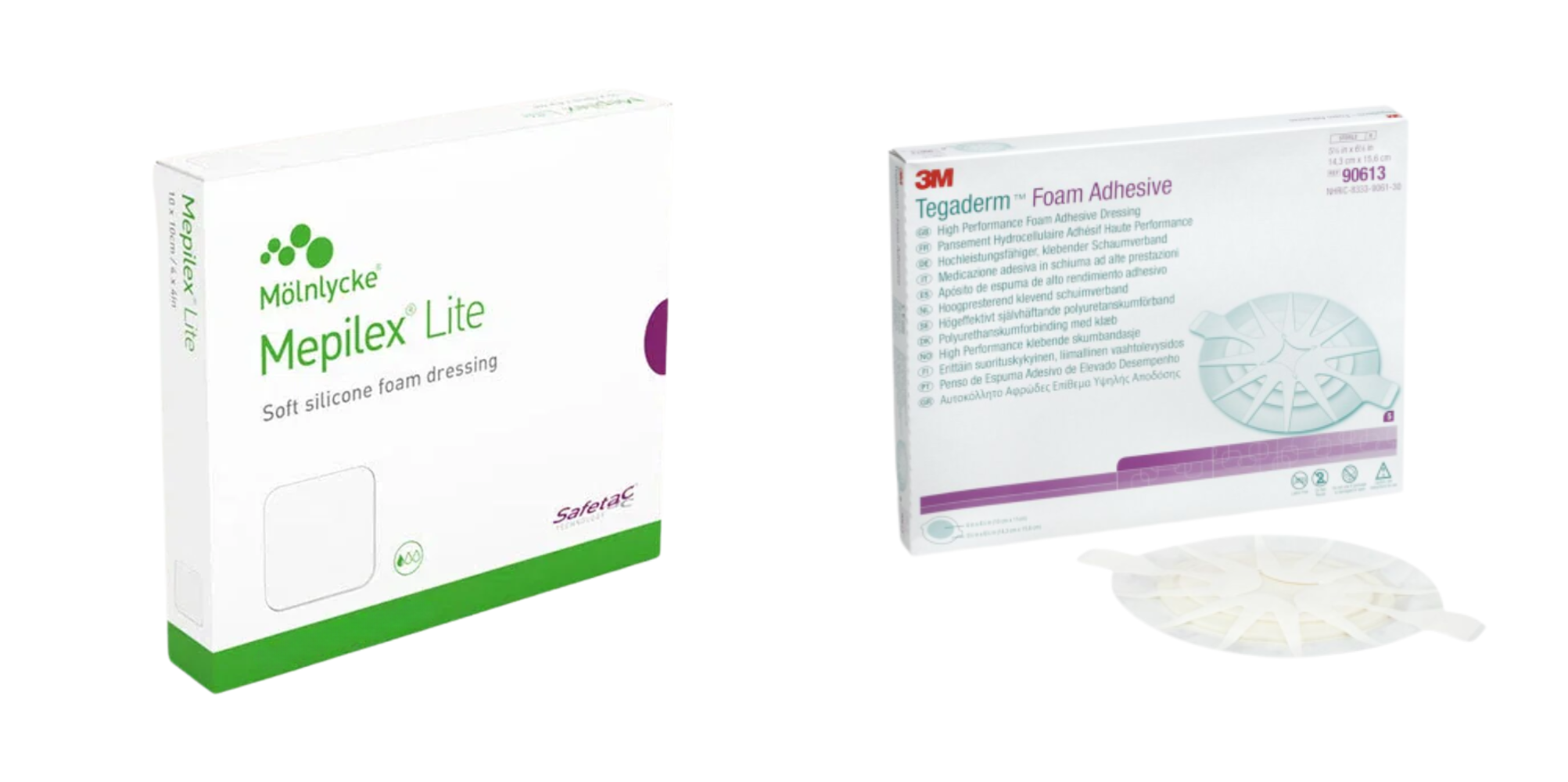
Foam Dressing Technologies, Compared
Soft Silicone Foam (Mepilex®)
Uses Mölnlycke's Safetac® soft silicone contact layer, which adheres gently to skin rather than the wound itself, reducing pain and trauma at dressing changes. The Mepilex range spans thin (Lite), standard bordered, flexible/stretch (Border Flex), non-bordered for use under compression or securement (UP), and a super-absorbent core version (XT) for more heavily exuding wounds.
Hydrocellular Foam (ALLEVYN™)
Smith+Nephew's hydrocellular foam core absorbs and locks in exudate while a breathable, waterproof outer film protects against external contamination and allows moisture vapour to escape, reducing maceration risk. Available with a gentler silicone-type border for fragile skin, or a standard acrylic adhesive border.
Adhesive Foam (Tegaderm™)
3M™/Solventum's foam dressings come in shapes contoured for specific body sites, including oval and heel/elbow designs, alongside standard squares. A straightforward polyurethane foam pad with an adhesive border for general-purpose exudate absorption.
Hydrofiber + Foam Hybrid (AQUACEL® Foam)
Convatec pairs a foam layer with a Hydrofiber® wound contact layer that gels on contact with exudate and wicks fluid vertically into the dressing, reducing lateral spread and maceration risk more effectively than foam alone. AQUACEL® Ag Foam adds ionic silver for wounds where antimicrobial action is also needed.
Bordered vs. Non-Bordered, Adhesive vs. Non-Adhesive
Bordered, self-adhesive foam dressings are the simplest option – apply and go, no separate securement needed. Non-bordered versions exist for a reason: they're designed to sit under a compression wrap, retention bandage, or secondary dressing, or for use on skin too fragile to tolerate repeated adhesive application. If a wound needs compression therapy or the surrounding skin is compromised, a non-bordered foam is usually the better starting point.
Foam Dressings Available at Surgo
| Technology | Product Line | Brand |
|---|---|---|
| Soft Silicone Foam | Mepilex® Lite, Border, Border Lite, Border Flex, Border Flex Lite, XT, UP | Mölnlycke |
| Hydrocellular Foam | ALLEVYN™ Gentle Border, ALLEVYN™ Adhesive | Smith+Nephew |
| Adhesive Foam | Tegaderm™ Foam, Tegaderm™ High Performance Foam | Solventum |
| Hydrofiber + Foam | AQUACEL® Foam, AQUACEL® Ag Foam | Convatec |
Frequently Asked Questions
What exudate level are foam dressings best suited for?
Foam dressings are generally best for moderate to heavy exudate. For very heavily exuding wounds, a hydrofiber-foam hybrid or a super-absorbent dressing may manage fluid more effectively than standard foam alone.
Can foam dressings be used under compression bandaging?
Yes – non-bordered, non-adhesive foam dressings (such as Mepilex® UP or ALLEVYN™ non-adhesive options) are specifically designed to sit under compression wraps or secondary dressings.
What's the difference between silicone foam and hydrocellular foam?
Both absorb exudate, but soft silicone foam dressings use a silicone contact layer specifically designed for gentle, low-trauma adhesion and removal, while hydrocellular foam refers to the absorbent foam structure itself and can be paired with either silicone or standard adhesive borders.


.png)


Foam dressings are the workhorse of exudate management, cushioning the wound, absorbing fluid, and maintaining a moist healing environment for anything from a pressure injury to a post-surgical wound. But "foam dressing" covers several genuinely different technologies. Here's how the main foam families differ and which situations call for each.
Foam Dressing Technologies, Compared
Soft Silicone Foam (Mepilex®)
Uses Mölnlycke's Safetac® soft silicone contact layer, which adheres gently to skin rather than the wound itself, reducing pain and trauma at dressing changes. The Mepilex range spans thin (Lite), standard bordered, flexible/stretch (Border Flex), non-bordered for use under compression or securement (UP), and a super-absorbent core version (XT) for more heavily exuding wounds.
Hydrocellular Foam (ALLEVYN™)
Smith+Nephew's hydrocellular foam core absorbs and locks in exudate while a breathable, waterproof outer film protects against external contamination and allows moisture vapour to escape, reducing maceration risk. Available with a gentler silicone-type border for fragile skin, or a standard acrylic adhesive border.
Adhesive Foam (Tegaderm™)
3M™/Solventum's foam dressings come in shapes contoured for specific body sites, including oval and heel/elbow designs, alongside standard squares. A straightforward polyurethane foam pad with an adhesive border for general-purpose exudate absorption.
Hydrofiber + Foam Hybrid (AQUACEL® Foam)
Convatec pairs a foam layer with a Hydrofiber® wound contact layer that gels on contact with exudate and wicks fluid vertically into the dressing, reducing lateral spread and maceration risk more effectively than foam alone. AQUACEL® Ag Foam adds ionic silver for wounds where antimicrobial action is also needed.
Bordered vs. Non-Bordered, Adhesive vs. Non-Adhesive
Bordered, self-adhesive foam dressings are the simplest option – apply and go, no separate securement needed. Non-bordered versions exist for a reason: they're designed to sit under a compression wrap, retention bandage, or secondary dressing, or for use on skin too fragile to tolerate repeated adhesive application. If a wound needs compression therapy or the surrounding skin is compromised, a non-bordered foam is usually the better starting point.
Foam Dressings Available at Surgo
| Technology | Product Line | Brand |
|---|---|---|
| Soft Silicone Foam | Mepilex® Lite, Border, Border Lite, Border Flex, Border Flex Lite, XT, UP | Mölnlycke |
| Hydrocellular Foam | ALLEVYN™ Gentle Border, ALLEVYN™ Adhesive | Smith+Nephew |
| Adhesive Foam | Tegaderm™ Foam, Tegaderm™ High Performance Foam | Solventum |
| Hydrofiber + Foam | AQUACEL® Foam, AQUACEL® Ag Foam | Convatec |
Frequently Asked Questions
What exudate level are foam dressings best suited for?
Foam dressings are generally best for moderate to heavy exudate. For very heavily exuding wounds, a hydrofiber-foam hybrid or a super-absorbent dressing may manage fluid more effectively than standard foam alone.
Can foam dressings be used under compression bandaging?
Yes – non-bordered, non-adhesive foam dressings (such as Mepilex® UP or ALLEVYN™ non-adhesive options) are specifically designed to sit under compression wraps or secondary dressings.
What's the difference between silicone foam and hydrocellular foam?
Both absorb exudate, but soft silicone foam dressings use a silicone contact layer specifically designed for gentle, low-trauma adhesion and removal, while hydrocellular foam refers to the absorbent foam structure itself and can be paired with either silicone or standard adhesive borders.
