
Not every mobility aid serves the same purpose during recovery – and choosing the wrong one can slow healing or create new strain elsewhere in the body. The right choice depends largely on one question: does the injured leg need to stay completely off the ground, or does the person just need extra balance and support while walking? Here's how a standard rollator, a knee walker, and a hands-free alternative differ, and which situations call for each.
Mobility Aid Options, Compared
Standard Rollator (Nitro Sprint Rollator)
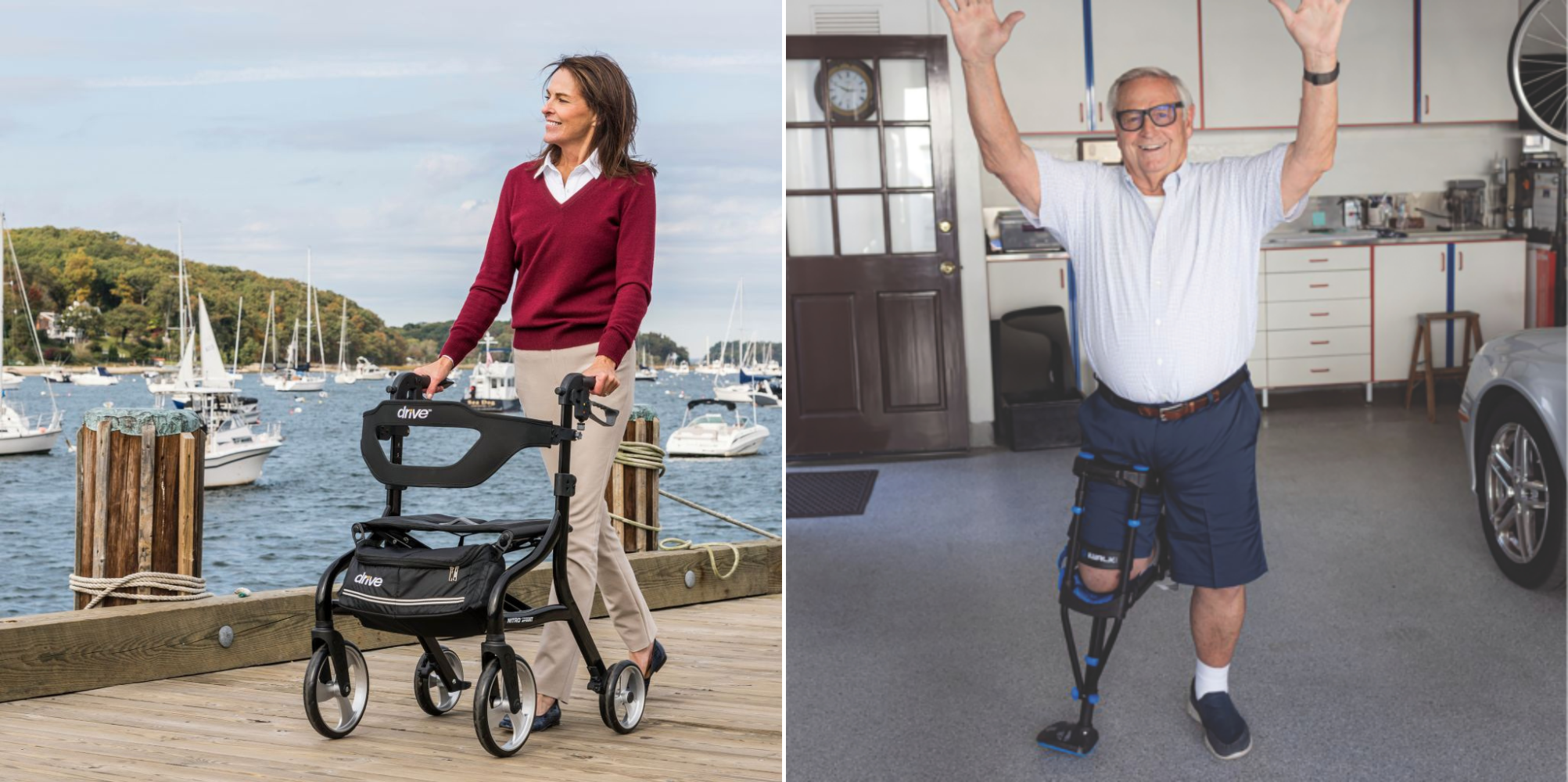
A standard rollator is designed for individuals who can bear at least some weight on both legs but need extra balance, stability, or support while walking – common after hip or knee surgery, or for general mobility limitations. The Nitro Sprint features large 10" front wheels, an integrated slow-down brake system, and a padded seat for resting. It is not designed to keep weight fully off one leg, so it's not the right choice for non-weight-bearing recovery.
Knee Walker / Knee Rollator (BIOS 4-Wheel Knee Rollator)
Often called a "knee walker" or "knee scooter," this style of device is built specifically for non-weight-bearing recovery – the injured leg rests on a padded knee platform while the person propels themselves using the uninjured leg and steers with handlebars. The BIOS 4-Wheel Knee Rollator uses a steel frame, four 8" wheels, hand brakes, and an adjustable knee pad and handlebar height, keeping weight completely off the injured limb while allowing faster, more comfortable movement than crutches.
Hands-Free Knee Crutch (iWALK3.0)
A different approach entirely – rather than rolling on wheels, the iWALK3.0 straps to the thigh and lower leg, letting the user walk using their natural upper leg movement while keeping the injured foot or ankle elevated and off the ground. This frees both hands completely, which a knee walker or rollator cannot do, making it well suited to non-weight-bearing recovery that involves stairs, uneven terrain, or tasks requiring hand use.
Choosing Based on Weight-Bearing Status
The single most important factor is whether a healthcare provider has restricted weight-bearing on the injured leg entirely, or simply recommended additional support while walking:
Full weight-bearing restriction (non-weight-bearing): A knee walker or hands-free knee crutch is appropriate – both are designed to keep the injured limb completely off the ground. A standard rollator is not suitable here, since it still requires some weight on both legs for stability.
Weight-bearing as tolerated, or general balance support: A standard rollator is the right tool – it provides stability, a seat for resting, and support for both legs during walking, which a knee walker isn't designed for.
Knee Walker vs. Hands-Free Knee Crutch: Which One?
For non-weight-bearing recovery specifically, the choice between a wheeled knee walker and a hands-free knee crutch comes down to environment and lifestyle:
Choose a knee walker if: Most of the recovery will happen on flat, indoor or paved surfaces (home, office, smooth sidewalks), and a seated place to rest the knee while moving is preferred. Steering with handlebars also tends to feel more intuitive for many users right away.
Choose the iWALK3.0 if: Full use of both hands is important during the day (carrying items, using stairs, working), or the recovery environment includes uneven terrain, tight spaces, or stairs where a wheeled device is harder to maneuver. It does typically take a few days of practice to build confidence with the ergonomic strapping and balance required.
Mobility Aids Available at Surgo
| Device Type | Product | Best For |
|---|---|---|
| Standard Rollator | Nitro Sprint Rollator, Standard – Black | Weight-bearing as tolerated, general balance and stability support |
| Knee Walker | BIOS 4-Wheel Knee Rollator – Black | Non-weight-bearing recovery, mostly flat/indoor terrain |
| Hands-Free Knee Crutch | iWALK3.0 Hands-Free Knee Crutch | Non-weight-bearing recovery requiring free hands, stairs, or uneven terrain |
Frequently Asked Questions
Can I use a standard rollator if I'm not allowed to put weight on one leg?
No, standard rollators are designed for users who can bear at least some weight on both legs. For a full non-weight-bearing restriction, a knee walker or hands-free knee crutch is the appropriate choice.
Is a knee walker easier to use than crutches?
Many people find a knee walker more comfortable than traditional underarm crutches, since it removes pressure from the underarms, wrists, and shoulders, and allows for more natural, faster movement. Comfort can vary by individual, so it's worth discussing options with a healthcare provider.
Can the iWALK3.0 be used on stairs?
The hands-free design of the iWALK3.0 is intended to allow more natural movement over varied terrain, including stairs, compared to a wheeled knee walker. As with any new mobility device, it's best to build confidence on flat ground first and follow the manufacturer's guidance before attempting stairs.
How do I know which weight-bearing category I'm in?
Your surgeon or physiotherapist will specify your weight-bearing status after surgery (for example, non-weight-bearing, weight-bearing as tolerated, or partial weight-bearing). This should always guide the choice of mobility aid rather than personal preference alone.


Not every mobility aid serves the same purpose during recovery – and choosing the wrong one can slow healing or create new strain elsewhere in the body. The right choice depends largely on one question: does the injured leg need to stay completely off the ground, or does the person just need extra balance and support while walking? Here's how a standard rollator, a knee walker, and a hands-free alternative differ, and which situations call for each.
Mobility Aid Options, Compared
Standard Rollator (Nitro Sprint Rollator)
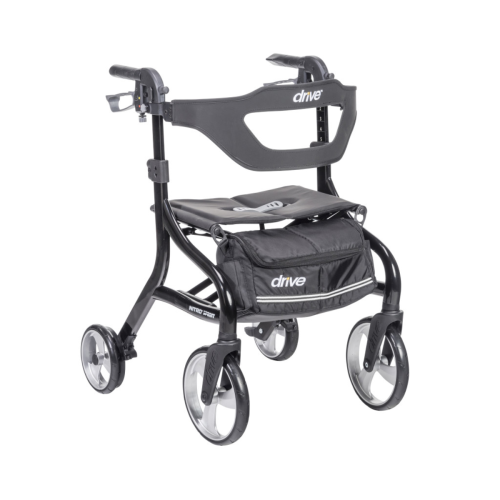
A standard rollator is designed for individuals who can bear at least some weight on both legs but need extra balance, stability, or support while walking – common after hip or knee surgery, or for general mobility limitations. The Nitro Sprint features large 10" front wheels, an integrated slow-down brake system, and a padded seat for resting. It is not designed to keep weight fully off one leg, so it's not the right choice for non-weight-bearing recovery.
Knee Walker / Knee Rollator (BIOS 4-Wheel Knee Rollator)
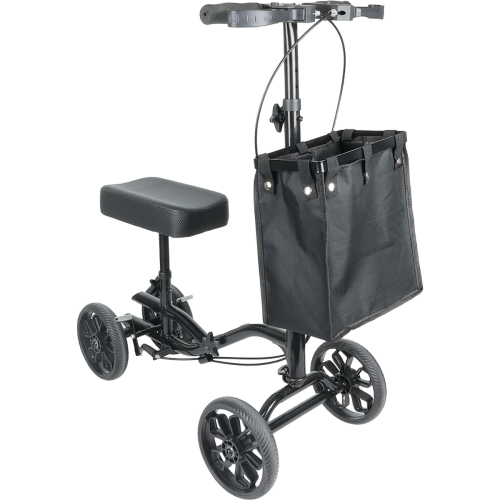
Often called a "knee walker" or "knee scooter," this style of device is built specifically for non-weight-bearing recovery – the injured leg rests on a padded knee platform while the person propels themselves using the uninjured leg and steers with handlebars. The BIOS 4-Wheel Knee Rollator uses a steel frame, four 8" wheels, hand brakes, and an adjustable knee pad and handlebar height, keeping weight completely off the injured limb while allowing faster, more comfortable movement than crutches.
Hands-Free Knee Crutch (iWALK3.0)
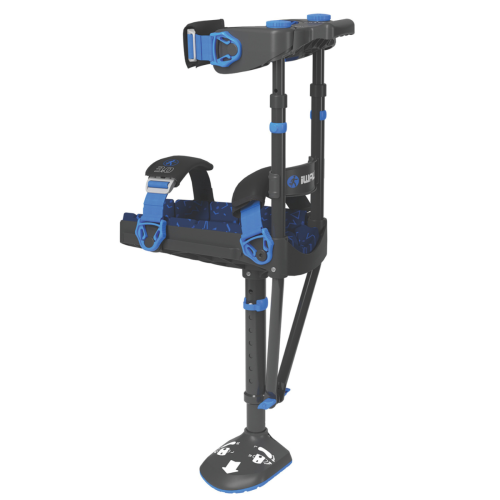
A different approach entirely – rather than rolling on wheels, the iWALK3.0 straps to the thigh and lower leg, letting the user walk using their natural upper leg movement while keeping the injured foot or ankle elevated and off the ground. This frees both hands completely, which a knee walker or rollator cannot do, making it well suited to non-weight-bearing recovery that involves stairs, uneven terrain, or tasks requiring hand use.
Choosing Based on Weight-Bearing Status
The single most important factor is whether a healthcare provider has restricted weight-bearing on the injured leg entirely, or simply recommended additional support while walking:
Full weight-bearing restriction (non-weight-bearing): A knee walker or hands-free knee crutch is appropriate – both are designed to keep the injured limb completely off the ground. A standard rollator is not suitable here, since it still requires some weight on both legs for stability.
Weight-bearing as tolerated, or general balance support: A standard rollator is the right tool – it provides stability, a seat for resting, and support for both legs during walking, which a knee walker isn't designed for.
Knee Walker vs. Hands-Free Knee Crutch: Which One?
For non-weight-bearing recovery specifically, the choice between a wheeled knee walker and a hands-free knee crutch comes down to environment and lifestyle:
Choose a knee walker if: Most of the recovery will happen on flat, indoor or paved surfaces (home, office, smooth sidewalks), and a seated place to rest the knee while moving is preferred. Steering with handlebars also tends to feel more intuitive for many users right away.
Choose the iWALK3.0 if: Full use of both hands is important during the day (carrying items, using stairs, working), or the recovery environment includes uneven terrain, tight spaces, or stairs where a wheeled device is harder to maneuver. It does typically take a few days of practice to build confidence with the ergonomic strapping and balance required.
Mobility Aids Available at Surgo
| Device Type | Product | Best For |
|---|---|---|
| Standard Rollator | Nitro Sprint Rollator, Standard – Black | Weight-bearing as tolerated, general balance and stability support |
| Knee Walker | BIOS 4-Wheel Knee Rollator – Black | Non-weight-bearing recovery, mostly flat/indoor terrain |
| Hands-Free Knee Crutch | iWALK3.0 Hands-Free Knee Crutch | Non-weight-bearing recovery requiring free hands, stairs, or uneven terrain |
Frequently Asked Questions
Can I use a standard rollator if I'm not allowed to put weight on one leg?
No, standard rollators are designed for users who can bear at least some weight on both legs. For a full non-weight-bearing restriction, a knee walker or hands-free knee crutch is the appropriate choice.
Is a knee walker easier to use than crutches?
Many people find a knee walker more comfortable than traditional underarm crutches, since it removes pressure from the underarms, wrists, and shoulders, and allows for more natural, faster movement. Comfort can vary by individual, so it's worth discussing options with a healthcare provider.
Can the iWALK3.0 be used on stairs?
The hands-free design of the iWALK3.0 is intended to allow more natural movement over varied terrain, including stairs, compared to a wheeled knee walker. As with any new mobility device, it's best to build confidence on flat ground first and follow the manufacturer's guidance before attempting stairs.
How do I know which weight-bearing category I'm in?
Your surgeon or physiotherapist will specify your weight-bearing status after surgery (for example, non-weight-bearing, weight-bearing as tolerated, or partial weight-bearing). This should always guide the choice of mobility aid rather than personal preference alone.
