
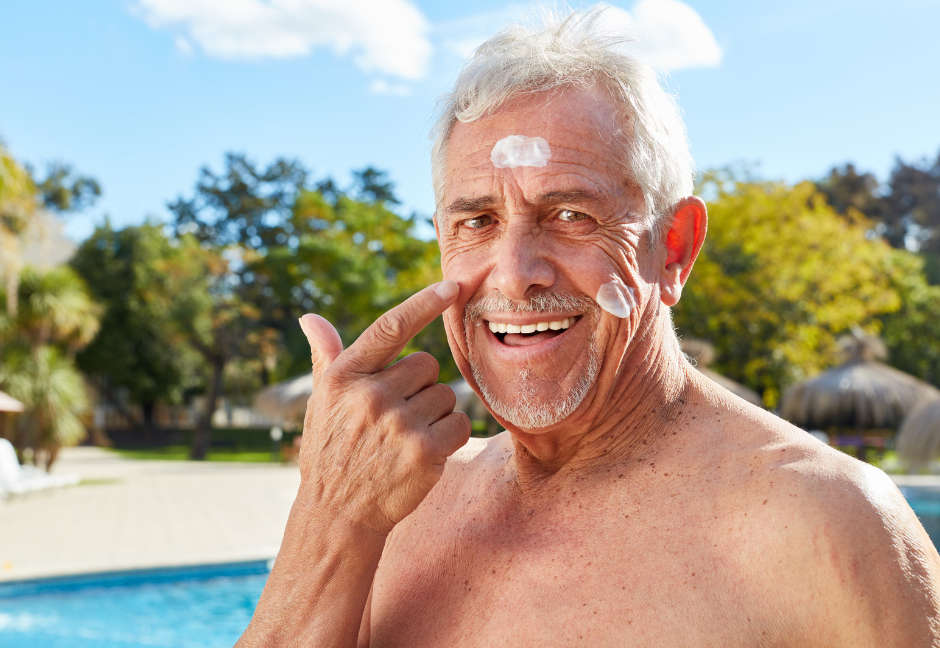
Sun protection is easy to overlook in home care, but it matters more as skin ages. Older skin is thinner, drier and slower to repair itself, and many common medications make skin react to sunlight more strongly than it otherwise would. For caregivers, a simple, consistent routine is one of the easiest ways to prevent painful burns and long-term skin damage. This guide explains why older and medication-sensitive skin needs extra care, which medications are commonly involved, and how to build a practical sun protection routine at home.
Quick Summary
- Older skin is thinner, heals more slowly and may not signal a burn as early
- Some common medications increase sensitivity to ultraviolet (UV) light
- Broad-spectrum SPF 30+ sunscreen, protective clothing and shade work best together
- Ask a pharmacist whether any current medication increases sun sensitivity
Why Older Skin Needs Extra Protection
Skin changes with age in ways that make sun exposure harder to tolerate. Four changes matter most in a caregiving setting:
Thinner Skin
The outer layers of skin lose thickness over time, leaving less natural protection against UV damage.
Slower Healing
A sunburn or irritated patch can take longer to recover and is more likely to blister, crack or become infected.
Cumulative Damage
Years of sun exposure add up, which is why consistent protection still matters later in life.
Reduced Sensation
Some older adults, or those with certain conditions, may not feel a burn developing until the damage is done.
Why Medications Make a Difference
Some medications can make skin more sensitive to ultraviolet light, a reaction known as photosensitivity. In someone taking one of these medications, a short time in the sun can cause a sunburn-like rash or exaggerated redness. The table below lists examples of medication types commonly associated with photosensitivity.
| Medication Type | Examples | Commonly Used For |
|---|---|---|
| Tetracycline antibiotics | Doxycycline | Bacterial infections, acne |
| Fluoroquinolone antibiotics | Ciprofloxacin | Bacterial infections |
| Thiazide diuretics | Hydrochlorothiazide | High blood pressure, fluid retention |
| Heart rhythm medications | Amiodarone | Irregular heart rhythms |
| Some anti-inflammatory medications | Naproxen, ketoprofen | Pain, inflammation |
| Retinoids | Isotretinoin, topical retinoids | Acne, other skin conditions |
| Herbal products | St. John's wort | Mood support (self-selected) |
Ask the Pharmacist
This is not a complete list, and not everyone taking these medications will react. A pharmacist or prescriber can review the full medication list and flag any that increase sun sensitivity, particularly when a new medication is started. Never stop or change a medication without medical guidance.
Sun Protection at a Glance
No single measure gives complete protection. The most effective approach combines several of the options below.
| Protection | What to Look For | Caregiver Tip |
|---|---|---|
| Sunscreen | Broad-spectrum, SPF 30 or higher, water-resistant | Apply 15 to 30 minutes before going outside and reapply every two hours |
| Clothing | Lightweight, tightly woven long sleeves and pants; UPF-rated garments | Choose breathable fabric to avoid overheating |
| Hat | Wide brim that shades the face, ears and neck | Check that the fit is secure and comfortable for longer wear |
| Sunglasses | Labelled UV400 or 100% UV protection | Wraparound styles also shield the delicate skin around the eyes |
| Lip Balm | SPF 30 or higher | Reapply after eating and drinking |
| Shade | Umbrella, canopy or tree cover | A good complement to sunscreen, not a replacement for it |
Choosing and Applying Sunscreen
Sunscreen is the foundation of most routines, and how it is applied matters as much as the number on the label.
- Broad-spectrum: protects against both UVA and UVB rays.
- SPF 30 or higher: general guidance for everyday sun protection.
- Mineral formulas: sunscreens containing zinc oxide or titanium dioxide are often better tolerated by sensitive or reactive skin. Patch testing a new product on a small area first is a sensible step.
- Generous application: most people apply too little. Cover all exposed skin evenly.
Commonly Missed Areas
Ears, back of the neck, tops of the hands and feet, and the scalp where hair is thin are the spots most often missed. For someone who sits or reclines for long periods, remember the areas that face the window or sun.
Practical Tips for Caregivers
- Make it part of the daily routine. Apply sunscreen in the morning along with other personal care so it is not forgotten.
- Choose easy-to-apply formats. A spray can help a caregiver cover the back and shoulders quickly, while a lotion gives more control for someone who dislikes aerosols or has sensitive skin. Apply spray to your hands first for the face, and use it in a well-ventilated area.
- Check the UV index. Sun protection is generally recommended whenever the UV index reaches 3 or higher, even on cloudy days.
- Plan outdoor time around the sun. UV exposure is typically strongest in the middle of the day, so earlier or later outings are gentler.
- Protect indoor time too. UVA rays pass through window glass, so someone seated beside a sunny window for long periods can benefit from sun protection as well.
- Watch for heat stress. Older adults are more vulnerable to overheating and dehydration, so encourage fluids and rest in the shade.
- Check skin regularly. Look for new, changing or non-healing spots and mention them to a healthcare provider.
When to Seek Medical Advice
- Blistering, severe pain or widespread redness after sun exposure
- A rash that appears after sun exposure and keeps recurring
- Fever, confusion or dizziness after time in the heat
- A mole or spot that is new, growing, bleeding, or changing in colour or shape
Sun Protection Supplies Available at Surgo
Surgo carries a range of SUNZONE sun care products, all made in Canada. The right format depends on who is applying it and how sensitive the skin is.

Fragrance Free Lotion, 1 L

Sunscreen Spray, 177 mL

Sunscreen Mini Spray, 50 mL

Aloe After Sun Spray, 177 mL
| Product | Format | Key Features | Best For |
|---|---|---|---|
| SUNZONE SPF 50+ Ultra Sunscreen Lotion (Fragrance Free) - 1L Item Code: 300-25458 |
Lotion | Broad-spectrum SPF 50+, fragrance free, hypoallergenic, non-comedogenic, water and sweat resistant for up to 80 minutes | Sensitive skin and shared or professional use where a larger size is practical |
| SUNZONE SPF 50+ Sunscreen Spray - 177 mL Item Code: 300-25461 |
Spray | Broad-spectrum SPF 50+, 360° spray nozzle, clear continuous mist, lightweight and non-greasy, water resistant for up to 80 minutes | Quick coverage of the back, shoulders and other hard-to-reach areas |
| SUNZONE SPF 50+ Sunscreen Mini Spray - 50 mL Item Code: 300-25465 |
Mini Spray | Same SPF 50+ broad-spectrum formula in a travel-friendly bottle, paraben-free and PABA-free | Outings, appointments and bags where a full-size bottle is impractical |
| SUNZONE Aloe After Sun Spray - 177 mL Item Code: 300-25901 |
After Sun | Aloe-enriched, non-greasy, soothes sunburn discomfort and hydrates dry or peeling skin | Post-sun skin care after time outdoors |
Choosing Between Lotion and Spray
The SUNZONE sprays contain fragrance and alcohol, so for someone who is fragrance-sensitive or has reactive skin, the fragrance-free lotion is the better choice. When using a spray, hold it 10 to 15 cm from the skin, apply to your hands first for the face rather than spraying directly, and avoid windy conditions. The spray cans carry a flammability warning, so keep them away from heat, open flames and smoking materials. Always check the label directions and, for medication-sensitive skin, ask a pharmacist before introducing a new product.
Frequently Asked Questions
Do older adults still need sunscreen if they rarely go outside?
Often yes. Short, frequent exposures such as walks, garden time and sitting by a bright window add up over time. Daily sunscreen on exposed skin is a simple habit that covers all of these situations.
How can I tell if a medication makes skin more sun-sensitive?
A pharmacist is the best person to ask. They can review the full list of medications and flag any with a known photosensitivity risk. Medication labels and inserts sometimes include a sun exposure warning as well.
Is a higher SPF always better?
Higher SPF numbers offer slightly more protection, but no sunscreen blocks everything. How much is applied and how often it is reapplied matters as much as the number on the label.
What type of sunscreen is best for very sensitive skin?
Fragrance-free, hypoallergenic formulas are commonly recommended for sensitive skin, and some people also find mineral-based sunscreens better tolerated. If there is a history of skin reactions, check with a healthcare provider or pharmacist before introducing a new product.
Does sun protection mean missing out on vitamin D?
Some people worry about this, but vitamin D can also come from food and supplements. If there is a concern, a healthcare provider can advise on whether supplementation is appropriate.
Shop Sun Protection Supplies
Browse our SUNZONE sunscreens and after sun care at Surgo. If you have questions about choosing products for sensitive or medication-affected skin, our customer service team is happy to help.
Shop Sun Protection Supplies

Sun protection is easy to overlook in home care, but it matters more as skin ages. Older skin is thinner, drier and slower to repair itself, and many common medications make skin react to sunlight more strongly than it otherwise would. For caregivers, a simple, consistent routine is one of the easiest ways to prevent painful burns and long-term skin damage. This guide explains why older and medication-sensitive skin needs extra care, which medications are commonly involved, and how to build a practical sun protection routine at home.
Quick Summary
- Older skin is thinner, heals more slowly and may not signal a burn as early
- Some common medications increase sensitivity to ultraviolet (UV) light
- Broad-spectrum SPF 30+ sunscreen, protective clothing and shade work best together
- Ask a pharmacist whether any current medication increases sun sensitivity
Why Older Skin Needs Extra Protection
Skin changes with age in ways that make sun exposure harder to tolerate. Four changes matter most in a caregiving setting:
Thinner Skin
The outer layers of skin lose thickness over time, leaving less natural protection against UV damage.
Slower Healing
A sunburn or irritated patch can take longer to recover and is more likely to blister, crack or become infected.
Cumulative Damage
Years of sun exposure add up, which is why consistent protection still matters later in life.
Reduced Sensation
Some older adults, or those with certain conditions, may not feel a burn developing until the damage is done.
Why Medications Make a Difference
Some medications can make skin more sensitive to ultraviolet light, a reaction known as photosensitivity. In someone taking one of these medications, a short time in the sun can cause a sunburn-like rash or exaggerated redness. The table below lists examples of medication types commonly associated with photosensitivity.
| Medication Type | Examples | Commonly Used For |
|---|---|---|
| Tetracycline antibiotics | Doxycycline | Bacterial infections, acne |
| Fluoroquinolone antibiotics | Ciprofloxacin | Bacterial infections |
| Thiazide diuretics | Hydrochlorothiazide | High blood pressure, fluid retention |
| Heart rhythm medications | Amiodarone | Irregular heart rhythms |
| Some anti-inflammatory medications | Naproxen, ketoprofen | Pain, inflammation |
| Retinoids | Isotretinoin, topical retinoids | Acne, other skin conditions |
| Herbal products | St. John's wort | Mood support (self-selected) |
Ask the Pharmacist
This is not a complete list, and not everyone taking these medications will react. A pharmacist or prescriber can review the full medication list and flag any that increase sun sensitivity, particularly when a new medication is started. Never stop or change a medication without medical guidance.
Sun Protection at a Glance
No single measure gives complete protection. The most effective approach combines several of the options below.
| Protection | What to Look For | Caregiver Tip |
|---|---|---|
| Sunscreen | Broad-spectrum, SPF 30 or higher, water-resistant | Apply 15 to 30 minutes before going outside and reapply every two hours |
| Clothing | Lightweight, tightly woven long sleeves and pants; UPF-rated garments | Choose breathable fabric to avoid overheating |
| Hat | Wide brim that shades the face, ears and neck | Check that the fit is secure and comfortable for longer wear |
| Sunglasses | Labelled UV400 or 100% UV protection | Wraparound styles also shield the delicate skin around the eyes |
| Lip Balm | SPF 30 or higher | Reapply after eating and drinking |
| Shade | Umbrella, canopy or tree cover | A good complement to sunscreen, not a replacement for it |
Choosing and Applying Sunscreen
Sunscreen is the foundation of most routines, and how it is applied matters as much as the number on the label.
- Broad-spectrum: protects against both UVA and UVB rays.
- SPF 30 or higher: general guidance for everyday sun protection.
- Mineral formulas: sunscreens containing zinc oxide or titanium dioxide are often better tolerated by sensitive or reactive skin. Patch testing a new product on a small area first is a sensible step.
- Generous application: most people apply too little. Cover all exposed skin evenly.
Commonly Missed Areas
Ears, back of the neck, tops of the hands and feet, and the scalp where hair is thin are the spots most often missed. For someone who sits or reclines for long periods, remember the areas that face the window or sun.
Practical Tips for Caregivers
- Make it part of the daily routine. Apply sunscreen in the morning along with other personal care so it is not forgotten.
- Choose easy-to-apply formats. A spray can help a caregiver cover the back and shoulders quickly, while a lotion gives more control for someone who dislikes aerosols or has sensitive skin. Apply spray to your hands first for the face, and use it in a well-ventilated area.
- Check the UV index. Sun protection is generally recommended whenever the UV index reaches 3 or higher, even on cloudy days.
- Plan outdoor time around the sun. UV exposure is typically strongest in the middle of the day, so earlier or later outings are gentler.
- Protect indoor time too. UVA rays pass through window glass, so someone seated beside a sunny window for long periods can benefit from sun protection as well.
- Watch for heat stress. Older adults are more vulnerable to overheating and dehydration, so encourage fluids and rest in the shade.
- Check skin regularly. Look for new, changing or non-healing spots and mention them to a healthcare provider.
When to Seek Medical Advice
- Blistering, severe pain or widespread redness after sun exposure
- A rash that appears after sun exposure and keeps recurring
- Fever, confusion or dizziness after time in the heat
- A mole or spot that is new, growing, bleeding, or changing in colour or shape
Sun Protection Supplies Available at Surgo
Surgo carries a range of SUNZONE sun care products, all made in Canada. The right format depends on who is applying it and how sensitive the skin is.
Fragrance Free Lotion, 1 L
Sunscreen Spray, 177 mL
Sunscreen Mini Spray, 50 mL
Aloe After Sun Spray, 177 mL
| Product | Format | Key Features | Best For |
|---|---|---|---|
| SUNZONE SPF 50+ Ultra Sunscreen Lotion (Fragrance Free) - 1L Item Code: 300-25458 |
Lotion | Broad-spectrum SPF 50+, fragrance free, hypoallergenic, non-comedogenic, water and sweat resistant for up to 80 minutes | Sensitive skin and shared or professional use where a larger size is practical |
| SUNZONE SPF 50+ Sunscreen Spray - 177 mL Item Code: 300-25461 |
Spray | Broad-spectrum SPF 50+, 360° spray nozzle, clear continuous mist, lightweight and non-greasy, water resistant for up to 80 minutes | Quick coverage of the back, shoulders and other hard-to-reach areas |
| SUNZONE SPF 50+ Sunscreen Mini Spray - 50 mL Item Code: 300-25465 |
Mini Spray | Same SPF 50+ broad-spectrum formula in a travel-friendly bottle, paraben-free and PABA-free | Outings, appointments and bags where a full-size bottle is impractical |
| SUNZONE Aloe After Sun Spray - 177 mL Item Code: 300-25901 |
After Sun | Aloe-enriched, non-greasy, soothes sunburn discomfort and hydrates dry or peeling skin | Post-sun skin care after time outdoors |
Choosing Between Lotion and Spray
The SUNZONE sprays contain fragrance and alcohol, so for someone who is fragrance-sensitive or has reactive skin, the fragrance-free lotion is the better choice. When using a spray, hold it 10 to 15 cm from the skin, apply to your hands first for the face rather than spraying directly, and avoid windy conditions. The spray cans carry a flammability warning, so keep them away from heat, open flames and smoking materials. Always check the label directions and, for medication-sensitive skin, ask a pharmacist before introducing a new product.
Frequently Asked Questions
Do older adults still need sunscreen if they rarely go outside?
Often yes. Short, frequent exposures such as walks, garden time and sitting by a bright window add up over time. Daily sunscreen on exposed skin is a simple habit that covers all of these situations.
How can I tell if a medication makes skin more sun-sensitive?
A pharmacist is the best person to ask. They can review the full list of medications and flag any with a known photosensitivity risk. Medication labels and inserts sometimes include a sun exposure warning as well.
Is a higher SPF always better?
Higher SPF numbers offer slightly more protection, but no sunscreen blocks everything. How much is applied and how often it is reapplied matters as much as the number on the label.
What type of sunscreen is best for very sensitive skin?
Fragrance-free, hypoallergenic formulas are commonly recommended for sensitive skin, and some people also find mineral-based sunscreens better tolerated. If there is a history of skin reactions, check with a healthcare provider or pharmacist before introducing a new product.
Does sun protection mean missing out on vitamin D?
Some people worry about this, but vitamin D can also come from food and supplements. If there is a concern, a healthcare provider can advise on whether supplementation is appropriate.
Shop Sun Protection Supplies
Browse our SUNZONE sunscreens and after sun care at Surgo. If you have questions about choosing products for sensitive or medication-affected skin, our customer service team is happy to help.
Shop Sun Protection Supplies
