0 CAD 0.00
items in your cartto quote Checkout
Ooops no items were found.
Try something else.
Ok
Loading…

How to Disinfect High-Touch Areas Faster (No PPE, No Mixing, No Rinse)

5 min

High-touch surfaces are the most common sources of cross-contamination in healthcare, education, food service, and other public environments. Yet many facilities still rely on disinfectants that slow teams down (products that require dilution, PPE, rinsing, or long contact times). 

Envirocleanse-A, powered by hypochlorous acid (HOCl), streamlines the entire workflow with a ready-to-use, non-toxic, no-rinse formula that kills priority pathogens in minutes without gloves, ventilation, or special handling. This makes it ideal for fast turnover, daily routine disinfection, and environments with children, seniors, pets, or staff with sensitivities. 


Defining High-Touch Areas by Setting 

High-touch surfaces vary by environment, but all share the same characteristics: they are frequently handled and have a high likelihood of harboring pathogens. 

Healthcare 

  • Bed rails 
  • Exam tables 
  • Doorknobs and handles 
  • Blood pressure cuffs 
  • Stethoscopes and equipment surfaces 
  • Nurse station counters 
  • Wheelchairs and mobility devices 

Schools & Daycares 

  • Desks and chairs 
  • Light switches 
  • Shared electronics 
  • Play equipment and toys 
  • Washroom stall doors 
  • Water fountains 

Food Service 

  • Prep tables and cutting boards 
  • Refrigerator/freezer handles 
  • POS terminals and touchscreens 
  • Dining tables 
  • Menus and condiment stations 

Commercial & Public Settings 

  • Elevator buttons 
  • Handrails 
  • Gym equipment 
  • Waiting area seating 
  • Countertops 

By identifying these areas, teams can create targeted, fast workflows rather than broad, time-consuming cleaning routines. 


Why Traditional High-Touch Surface Disinfectants Slow Teams Down 

Many legacy disinfectants introduce unnecessary complexity into daily cleaning: 

Bleach 

  • Must be diluted correctly 
  • Produces strong fumes requiring ventilation 
  • Corrosive to metals and equipment 
  • Requires rinsing on food-contact surfaces 
  • Needs gloves and PPE 

Quaternary Ammonium Wipes (Quats) 

  • Require gloves 
  • Leave residue that must be wiped away 
  • Can irritate skin and respiratory systems 
  • Not ideal for pediatrics, seniors, or sensitive environments 

Alcohol-Based Solutions 

  • Evaporate before contact time is achieved 
  • Drying can cause cracking on plastics and equipment 
  • Flammable and not ideal for large-area use 

These challenges lead to slower turnover, inconsistent protocols, and extra training requirements. 


Faster Workflow With Ready-to-Use HOCl 

Envirocleanse-A simplifies disinfection across all settings: 

  • No mixing or dilution 
  • No PPE required 
  • Odor-free, safe to use in occupied rooms 
  • Non-corrosive, safe for equipment and electronics 
  • Fast kill times: 
    • E. coli – 30 seconds 
    • MRSA, Salmonella, Listeria, Norovirus – under 2 minutes 
    • COVID-19 – under 1 minute 
    • C. diff – 2-5 minutes 

Because the chemistry is safe, stable, and gentle enough for direct skin contact, staff can disinfect high-touch areas as they go, without stopping to put on PPE or clear a room.  


Building a High-Touch Daily Checklist 

A strong checklist creates consistency, reduces missed surfaces, and ensures the disinfectant’s kill times are achieved.

1. Identify All High-Touch Surfaces (Daily)

A quick walk-through at the start of a shift ensures no new equipment or surfaces are missed. 

Examples: new tablets, shared keyboards, mobile workstations, carts, toys, or portable medical devices. 

2. Prioritize Surfaces by Risk

Rank areas by: 

  • Frequency of contact 
  • Number of people using the space 
  • Vulnerability of the population (pediatrics, LTC, clinics) 

High-priority targets should be disinfected multiple times per day.

3. Apply Envirocleanse-A Using a Simple 3-Step Method

1. Spray or wipe directly onto the surface

2. Ensure full coverage (no dry patches)

3. Let air-dry to meet kill time

No rinsing, PPE, or follow-up wiping required.

4. Schedule Touchpoint Disinfection

Suggested frequencies: 

  • Healthcare: Every patient turnover, plus hourly for shared spaces 
  • Schools: Before school, mid-day, after school 
  • Food Service: Before opening, throughout service, after closing 
  • Gyms: Before opening, between sessions, after closing 
  • Offices: Start of shift, mid-day, end of day 

5. Maintain Supply Stations

Place Envirocleanse-A spray bottles or wipe canisters in visible, accessible areas: 

  • Nurses' stations 
  • End of hallways 
  • Classrooms 
  • Kitchens 
  • Reception desks 
  • Locker rooms 

Accessibility makes compliance easier. 

6. End-of-Day Deep Disinfection

A final daily walkthrough ensures all surfaces receive full contact time and that staff are documenting disinfection as required by policy.  


Training Staff Quickly (Simple Protocol) 

Because Envirocleanse-A requires no PPE, no dilution, and no complicated steps, training can be completed in minutes: 

Quick Training Script 

  • Spray or wipe until the surface is visibly wet 
  • Make sure the entire surface is coated 
  • Let it air-dry completely – no wiping needed 
  • Use it on any hard surface, including equipment, electronics, food surfaces, and children’s items 
  • No gloves needed unless your facility prefers them 

This clarity supports consistent disinfection regardless of staff experience. 


FAQs 

What are high-touch surfaces? 

High-touch surfaces are objects or areas touched frequently throughout the day, such as doorknobs, light switches, bed rails, touchscreens, desks, and shared equipment. Because many people handle them, they carry a higher risk of spreading germs. 

How often should high-touch surfaces be disinfected? 

This depends on the setting and traffic level. In healthcare, high-touch surfaces may need disinfection between patient visits, while schools, offices, and public spaces are often cleaned multiple times daily. 

What is the best disinfectant for high-touch surfaces? 

The best disinfectant depends on contact time, safety, compatibility, and ease of use. Many facilities prefer ready-to-use, no-rinse options to simplify daily cleaning. 

Does Envirocleanse-A dry quickly? 

Yes. Envirocleanse-A dries naturally without residue and does not evaporate as quickly as alcohol-based products. 

Is Envirocleanse-A safe for electronics? 

Yes. Envirocleanse-A is non-corrosive and suitable for many hard, non-porous surfaces, including touchscreens, keyboards, and medical equipment. 

Does Envirocleanse-A require rinsing? 

No. Envirocleanse-A is a no-rinse disinfectant, meaning no follow-up wiping or rinsing is required after the contact time is met. 

Do staff need PPE to use Envirocleanse-A? 

No PPE is required for normal use. However, some facilities may still require gloves based on internal policies. 

Can Envirocleanse-A be used on food-contact surfaces? 

Yes. Its no-rinse formula can simplify workflows in kitchens and food prep areas. Always follow product labeling and facility protocols. 

Does Envirocleanse-A replace routine cleaning? 

No. Visibly dirty surfaces should still be cleaned first before disinfecting. 

What is a no-rinse disinfectant? 

A no-rinse disinfectant does not need to be wiped or rinsed after the required contact time, helping speed up daily cleaning. 

Can high-touch surfaces spread germs? 

Yes. Frequently touched surfaces can transfer bacteria and viruses, making regular disinfection an important part of infection prevention. 

How can facilities improve disinfection compliance? 

Simple protocols, accessible supplies, and ready-to-use products help staff disinfect high-touch surfaces more consistently. 
4 items found
Sort by
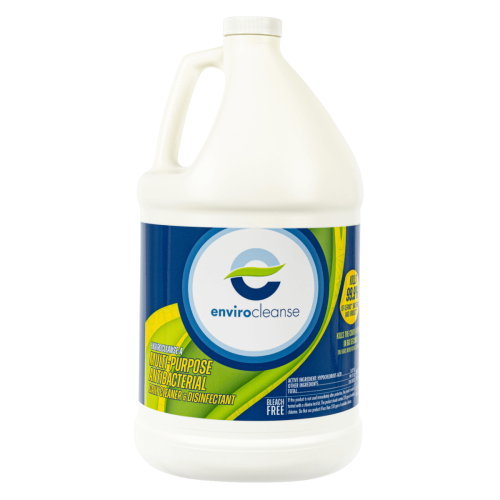
Envirocleanse-A Multi-Purpose Disinfectant - 1 Gallon Container
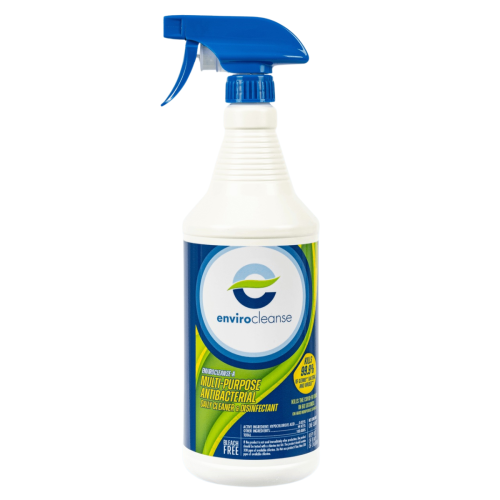
Envirocleanse-A Multi-Purpose Disinfectant - 32oz. Spray Bottle
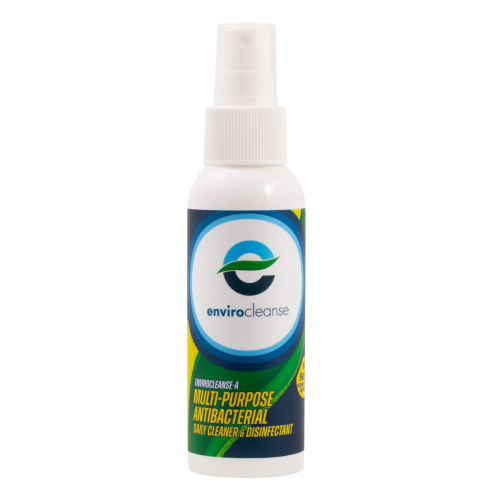
Envirocleanse-A Multi-Purpose Disinfectant - 3.4oz. Spray Bottle
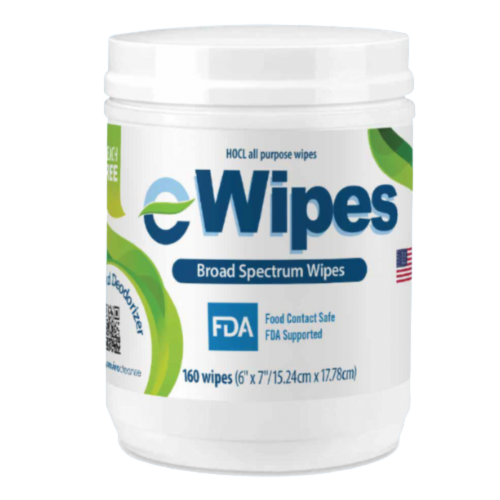
Envirocleanse-A Multi-Purpose Disinfecting HOCL Wipes - 160 Count Canister
Total 4 products

How to Disinfect High-Touch Areas Faster (No PPE, No Mixing, No Rinse)

5 min

High-touch surfaces are the most common sources of cross-contamination in healthcare, education, food service, and other public environments. Yet many facilities still rely on disinfectants that slow teams down (products that require dilution, PPE, rinsing, or long contact times). 

Envirocleanse-A, powered by hypochlorous acid (HOCl), streamlines the entire workflow with a ready-to-use, non-toxic, no-rinse formula that kills priority pathogens in minutes without gloves, ventilation, or special handling. This makes it ideal for fast turnover, daily routine disinfection, and environments with children, seniors, pets, or staff with sensitivities. 


Defining High-Touch Areas by Setting 

High-touch surfaces vary by environment, but all share the same characteristics: they are frequently handled and have a high likelihood of harboring pathogens. 

Healthcare 

  • Bed rails 
  • Exam tables 
  • Doorknobs and handles 
  • Blood pressure cuffs 
  • Stethoscopes and equipment surfaces 
  • Nurse station counters 
  • Wheelchairs and mobility devices 

Schools & Daycares 

  • Desks and chairs 
  • Light switches 
  • Shared electronics 
  • Play equipment and toys 
  • Washroom stall doors 
  • Water fountains 

Food Service 

  • Prep tables and cutting boards 
  • Refrigerator/freezer handles 
  • POS terminals and touchscreens 
  • Dining tables 
  • Menus and condiment stations 

Commercial & Public Settings 

  • Elevator buttons 
  • Handrails 
  • Gym equipment 
  • Waiting area seating 
  • Countertops 

By identifying these areas, teams can create targeted, fast workflows rather than broad, time-consuming cleaning routines. 


Why Traditional High-Touch Surface Disinfectants Slow Teams Down 

Many legacy disinfectants introduce unnecessary complexity into daily cleaning: 

Bleach 

  • Must be diluted correctly 
  • Produces strong fumes requiring ventilation 
  • Corrosive to metals and equipment 
  • Requires rinsing on food-contact surfaces 
  • Needs gloves and PPE 

Quaternary Ammonium Wipes (Quats) 

  • Require gloves 
  • Leave residue that must be wiped away 
  • Can irritate skin and respiratory systems 
  • Not ideal for pediatrics, seniors, or sensitive environments 

Alcohol-Based Solutions 

  • Evaporate before contact time is achieved 
  • Drying can cause cracking on plastics and equipment 
  • Flammable and not ideal for large-area use 

These challenges lead to slower turnover, inconsistent protocols, and extra training requirements. 


Faster Workflow With Ready-to-Use HOCl 

Envirocleanse-A simplifies disinfection across all settings: 

  • No mixing or dilution 
  • No PPE required 
  • Odor-free, safe to use in occupied rooms 
  • Non-corrosive, safe for equipment and electronics 
  • Fast kill times: 
    • E. coli – 30 seconds 
    • MRSA, Salmonella, Listeria, Norovirus – under 2 minutes 
    • COVID-19 – under 1 minute 
    • C. diff – 2-5 minutes 

Because the chemistry is safe, stable, and gentle enough for direct skin contact, staff can disinfect high-touch areas as they go, without stopping to put on PPE or clear a room.  


Building a High-Touch Daily Checklist 

A strong checklist creates consistency, reduces missed surfaces, and ensures the disinfectant’s kill times are achieved.

1. Identify All High-Touch Surfaces (Daily)

A quick walk-through at the start of a shift ensures no new equipment or surfaces are missed. 

Examples: new tablets, shared keyboards, mobile workstations, carts, toys, or portable medical devices. 

2. Prioritize Surfaces by Risk

Rank areas by: 

  • Frequency of contact 
  • Number of people using the space 
  • Vulnerability of the population (pediatrics, LTC, clinics) 

High-priority targets should be disinfected multiple times per day.

3. Apply Envirocleanse-A Using a Simple 3-Step Method

1. Spray or wipe directly onto the surface

2. Ensure full coverage (no dry patches)

3. Let air-dry to meet kill time

No rinsing, PPE, or follow-up wiping required.

4. Schedule Touchpoint Disinfection

Suggested frequencies: 

  • Healthcare: Every patient turnover, plus hourly for shared spaces 
  • Schools: Before school, mid-day, after school 
  • Food Service: Before opening, throughout service, after closing 
  • Gyms: Before opening, between sessions, after closing 
  • Offices: Start of shift, mid-day, end of day 

5. Maintain Supply Stations

Place Envirocleanse-A spray bottles or wipe canisters in visible, accessible areas: 

  • Nurses' stations 
  • End of hallways 
  • Classrooms 
  • Kitchens 
  • Reception desks 
  • Locker rooms 

Accessibility makes compliance easier. 

6. End-of-Day Deep Disinfection

A final daily walkthrough ensures all surfaces receive full contact time and that staff are documenting disinfection as required by policy.  


Training Staff Quickly (Simple Protocol) 

Because Envirocleanse-A requires no PPE, no dilution, and no complicated steps, training can be completed in minutes: 

Quick Training Script 

  • Spray or wipe until the surface is visibly wet 
  • Make sure the entire surface is coated 
  • Let it air-dry completely – no wiping needed 
  • Use it on any hard surface, including equipment, electronics, food surfaces, and children’s items 
  • No gloves needed unless your facility prefers them 

This clarity supports consistent disinfection regardless of staff experience. 


FAQs 

What are high-touch surfaces? 

High-touch surfaces are objects or areas touched frequently throughout the day, such as doorknobs, light switches, bed rails, touchscreens, desks, and shared equipment. Because many people handle them, they carry a higher risk of spreading germs. 

How often should high-touch surfaces be disinfected? 

This depends on the setting and traffic level. In healthcare, high-touch surfaces may need disinfection between patient visits, while schools, offices, and public spaces are often cleaned multiple times daily. 

What is the best disinfectant for high-touch surfaces? 

The best disinfectant depends on contact time, safety, compatibility, and ease of use. Many facilities prefer ready-to-use, no-rinse options to simplify daily cleaning. 

Does Envirocleanse-A dry quickly? 

Yes. Envirocleanse-A dries naturally without residue and does not evaporate as quickly as alcohol-based products. 

Is Envirocleanse-A safe for electronics? 

Yes. Envirocleanse-A is non-corrosive and suitable for many hard, non-porous surfaces, including touchscreens, keyboards, and medical equipment. 

Does Envirocleanse-A require rinsing? 

No. Envirocleanse-A is a no-rinse disinfectant, meaning no follow-up wiping or rinsing is required after the contact time is met. 

Do staff need PPE to use Envirocleanse-A? 

No PPE is required for normal use. However, some facilities may still require gloves based on internal policies. 

Can Envirocleanse-A be used on food-contact surfaces? 

Yes. Its no-rinse formula can simplify workflows in kitchens and food prep areas. Always follow product labeling and facility protocols. 

Does Envirocleanse-A replace routine cleaning? 

No. Visibly dirty surfaces should still be cleaned first before disinfecting. 

What is a no-rinse disinfectant? 

A no-rinse disinfectant does not need to be wiped or rinsed after the required contact time, helping speed up daily cleaning. 

Can high-touch surfaces spread germs? 

Yes. Frequently touched surfaces can transfer bacteria and viruses, making regular disinfection an important part of infection prevention. 

How can facilities improve disinfection compliance? 

Simple protocols, accessible supplies, and ready-to-use products help staff disinfect high-touch surfaces more consistently. 
4 items found
Sort by
Envirocleanse-A Multi-Purpose Disinfectant - 1 Gallon Container
Envirocleanse-A Multi-Purpose Disinfectant - 32oz. Spray Bottle
Envirocleanse-A Multi-Purpose Disinfectant - 3.4oz. Spray Bottle
Envirocleanse-A Multi-Purpose Disinfecting HOCL Wipes - 160 Count Canister
Total 4 products
SEARCH ×

Search