
One of the most common causes of pain, bleeding, and delayed healing at dressing changes isn't the wound itself, it's the dressing sticking to it. Non-adherent dressings are designed specifically to prevent that, protecting new tissue while still managing exudate. Here's how they work, when to use them, and which options Surgo carries.
Why Adherence Matters at Dressing Changes
When a standard gauze dressing dries out against a wound, exudate and fibrin can bond the fibres directly to the wound bed and any newly formed granulation tissue. Removing it then re-injures the wound, causes unnecessary pain, and can set healing back rather than support it. Non-adherent dressings are built to avoid this by keeping a barrier between the dressing material and the wound surface.
Perforated Film Pads
A thin perforated polyester or film layer sits between the wound and an absorbent core. The perforations let exudate pass through to the pad while the smooth film face resists sticking to the wound. This is the classic "Telfa-style" pad – simple, low-cost, and suited to lightly draining wounds.
Low-Adherent Absorbent Pads
These build on the perforated film concept with a layered construction – a low-adherent perforated film against the wound, a highly absorbent cotton/acrylic pad in the middle, and a hydrophobic backing layer to help contain fluid and reduce strike-through.
Petrolatum-Impregnated Mesh & Gauze
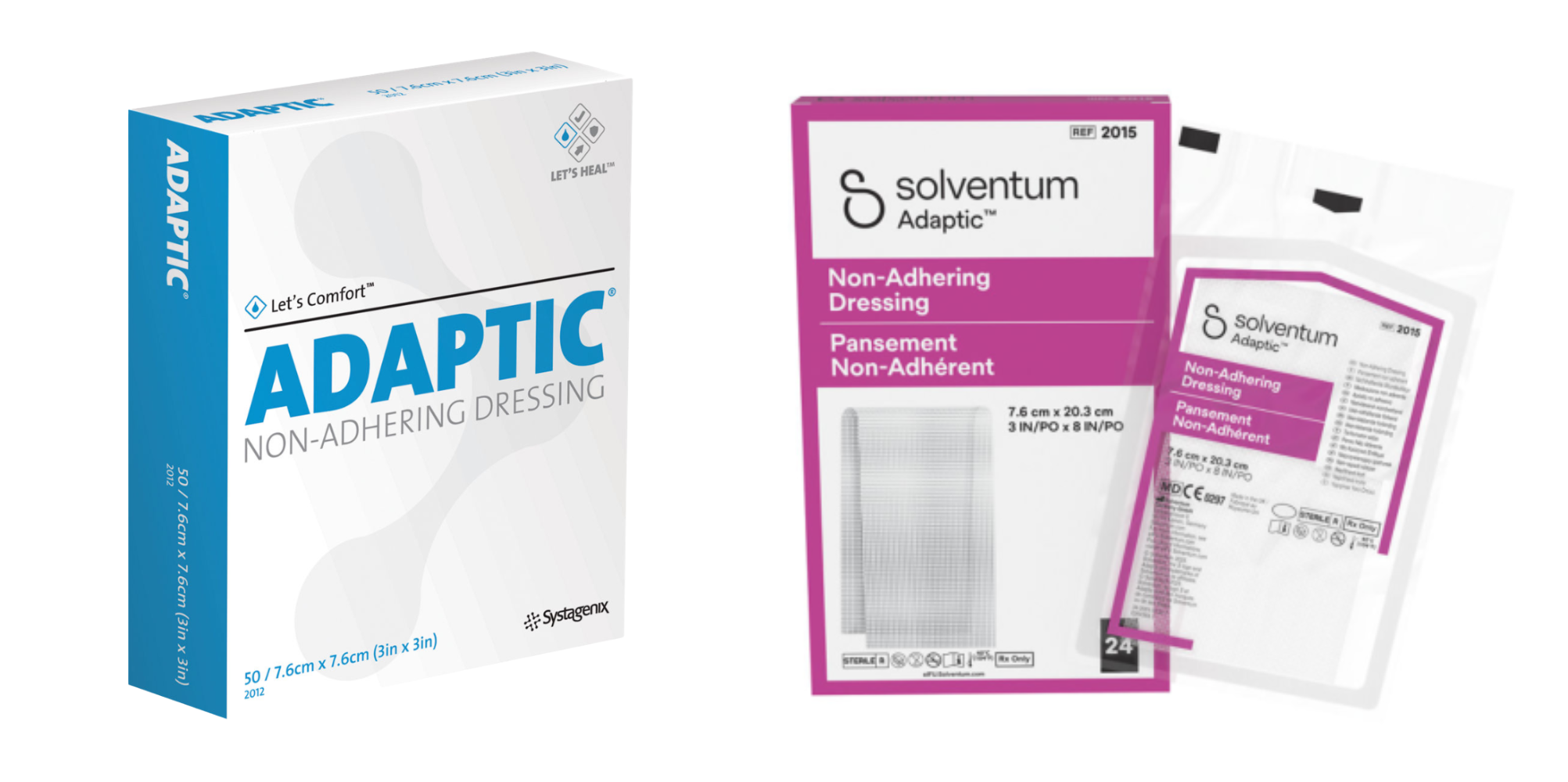
A knitted or woven mesh (often cellulose acetate) impregnated with a petrolatum emulsion. The petrolatum coating prevents the mesh fibres from adhering to the wound while still allowing exudate to pass through to a secondary dressing. Suitable for dry to highly exuding wounds, and cuttable to size.
Film + Pad Combinations
An all-in-one option that pairs a transparent waterproof film with a non-adherent absorbent pad. The film acts as a bacterial and viral barrier and lets patients bathe or shower, while the pad handles absorption and stays off the wound surface. A frame-delivery system typically makes these faster to apply than building up layers separately.
Choosing the Right Format
In general terms, lightly draining wounds are well served by a basic perforated film pad, wounds with higher exudate benefit from a low-adherent absorbent pad or a film + pad combination, and dry-to-highly-exuding wounds where a secondary dressing will be layered on top are often better suited to a petrolatum mesh. As always, dressing selection should follow the clinician's wound assessment and the manufacturer's instructions for use.
Non-Adherent Dressings Available at Surgo
| Format | Products | Brand |
|---|---|---|
| Perforated Film Pads | Dynarex® Non-Adherent Pads, Telfa™ Non-Adherent Dressing | Dynarex, Covidien |
| Low-Adherent Absorbent Pads | Melolite™ Low Adherent Absorbent Dressing | Smith+Nephew |
| Petrolatum Mesh & Gauze | 3M™ Adaptic™ Non-Adhering Dressing, Vaseline® Petrolatum Gauze | Solventum, Kendall |
| Film + Pad Combinations | 3M™ Tegaderm™ +Pad Film Dressing, Opsite™ Post-Op Dressing With Pad | Solventum, Smith+Nephew |
Frequently Asked Questions
What does "non-adherent" mean for a wound dressing?
It means the dressing is designed not to stick to the wound bed or newly formed tissue, so it can be removed without re-injuring the wound or causing unnecessary pain.
Are non-adherent dressings the same as low-adherent dressings?
They're closely related terms used somewhat interchangeably, though "low-adherent" is sometimes used for dressings with minimal but not zero adherence, while "non-adherent" typically describes a dressing built to resist sticking entirely, such as a petrolatum-impregnated mesh.
Can non-adherent dressings be used with other dressings?
Yes – many non-adherent products, particularly petrolatum mesh and perforated film pads, are designed as a primary wound contact layer with a secondary absorbent or compression dressing applied over top.



.png)
One of the most common causes of pain, bleeding, and delayed healing at dressing changes isn't the wound itself, it's the dressing sticking to it. Non-adherent dressings are designed specifically to prevent that, protecting new tissue while still managing exudate. Here's how they work, when to use them, and which options Surgo carries.
Why Adherence Matters at Dressing Changes
When a standard gauze dressing dries out against a wound, exudate and fibrin can bond the fibres directly to the wound bed and any newly formed granulation tissue. Removing it then re-injures the wound, causes unnecessary pain, and can set healing back rather than support it. Non-adherent dressings are built to avoid this by keeping a barrier between the dressing material and the wound surface.
Perforated Film Pads
A thin perforated polyester or film layer sits between the wound and an absorbent core. The perforations let exudate pass through to the pad while the smooth film face resists sticking to the wound. This is the classic "Telfa-style" pad – simple, low-cost, and suited to lightly draining wounds.
Low-Adherent Absorbent Pads
These build on the perforated film concept with a layered construction – a low-adherent perforated film against the wound, a highly absorbent cotton/acrylic pad in the middle, and a hydrophobic backing layer to help contain fluid and reduce strike-through.
Petrolatum-Impregnated Mesh & Gauze
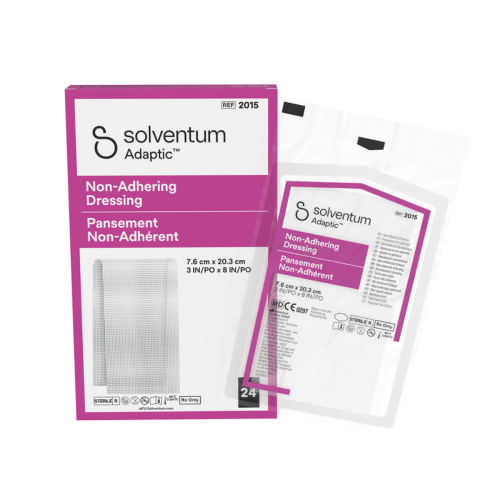
A knitted or woven mesh (often cellulose acetate) impregnated with a petrolatum emulsion. The petrolatum coating prevents the mesh fibres from adhering to the wound while still allowing exudate to pass through to a secondary dressing. Suitable for dry to highly exuding wounds, and cuttable to size.
Film + Pad Combinations
An all-in-one option that pairs a transparent waterproof film with a non-adherent absorbent pad. The film acts as a bacterial and viral barrier and lets patients bathe or shower, while the pad handles absorption and stays off the wound surface. A frame-delivery system typically makes these faster to apply than building up layers separately.
Choosing the Right Format
In general terms, lightly draining wounds are well served by a basic perforated film pad, wounds with higher exudate benefit from a low-adherent absorbent pad or a film + pad combination, and dry-to-highly-exuding wounds where a secondary dressing will be layered on top are often better suited to a petrolatum mesh. As always, dressing selection should follow the clinician's wound assessment and the manufacturer's instructions for use.
Non-Adherent Dressings Available at Surgo
| Format | Products | Brand |
|---|---|---|
| Perforated Film Pads | Dynarex® Non-Adherent Pads, Telfa™ Non-Adherent Dressing | Dynarex, Covidien |
| Low-Adherent Absorbent Pads | Melolite™ Low Adherent Absorbent Dressing | Smith+Nephew |
| Petrolatum Mesh & Gauze | 3M™ Adaptic™ Non-Adhering Dressing, Vaseline® Petrolatum Gauze | Solventum, Kendall |
| Film + Pad Combinations | 3M™ Tegaderm™ +Pad Film Dressing, Opsite™ Post-Op Dressing With Pad | Solventum, Smith+Nephew |
Frequently Asked Questions
What does "non-adherent" mean for a wound dressing?
It means the dressing is designed not to stick to the wound bed or newly formed tissue, so it can be removed without re-injuring the wound or causing unnecessary pain.
Are non-adherent dressings the same as low-adherent dressings?
They're closely related terms used somewhat interchangeably, though "low-adherent" is sometimes used for dressings with minimal but not zero adherence, while "non-adherent" typically describes a dressing built to resist sticking entirely, such as a petrolatum-impregnated mesh.
Can non-adherent dressings be used with other dressings?
Yes – many non-adherent products, particularly petrolatum mesh and perforated film pads, are designed as a primary wound contact layer with a secondary absorbent or compression dressing applied over top.
